All ScholarLed presses
This page shows the latest publications (in descending order of publication date) from all of the open access publishers in the ScholarLed consortium (Mattering Press, meson press, Open Book Publishers, punctum books, African Minds, and mediastudies.press).
Metadata is licensed as Creative Commons Zero (CC0) and is retrieved from Thoth’s open APIs.
Last updated: 2026-10-25 00:00:07
October 2026
2×6
Author: Nick Montfort
Author: Serge Bouchardon
Author: Carlos Léon
Author: Natalia Fedorova
Author: Andrew Campana
Author: Aleksandra Małecka
Author: Piotr Marecki
Earth, Milky Way: punctum books, 2026
https://doi.org/10.53288/0580.1.00
2×6 consists of short “stanzories”—stanzas that are also stories, each one relating an encounter between two people. Appearing in English, French, Spanish, Russian, Japanese, and Polish, the stanzories are generated by a similar underlying process, even as they do not neatly correspond to one another the way a translation typically does to a source text. These sixfold verses are generated by six short computer programs, the code of which is also presented in full. These simple programs can endlessly churn out combinatorial lines that challenge readers to determine to whom “she” and “he,” and “him” and “her,” refer, as well as which is the more powerful signifier, which the underdog. As John Cayley writes, “Gender is the chief generative obstacle here—making more than two times six—distributed across the natural grammars of these micro-dramas, with their psychosocial, vocational, and hierarchical narrative vectors.”
This title is a second edition of a book originally published by Les Figues Press, released as part of punctum’s Special Collections project.
Who Will Speak the Truth? Buenaventura de Salinas y Córdova’s Activist ‘Memorial’, Peru, 1630

Author: Buenaventura de Salinas y Córdova
Translator: Stephanie Merrim
Editor: Stephanie Merrim
Cambridge, UK: Open Book Publishers, 2026
https://doi.org/10.11647/OBP.0532
‘Who Will Speak the Truth?’ brings to light the powerful seventeenth-century voice of the Peruvian Franciscan Buenaventura de Salinas y Córdova, whose ‘Memorial on the Histories of the New World, Peru’ (1630) stands as one of the earliest and most forceful creole denunciations of colonial injustices against Andean Indigenous peoples. Framed by the apocalyptic imagery of the opening of the Seventh Seal in the Book of Revelation, Salinas’s Memorial is both exposé and call to action, articulating a passionate plea for justice and reform within the Spanish Empire.
Zen for Record
Author: Ken Friedman
Contributions by: Craig Dworkin
Contributions by: Hanna B. Hölling
Contributions by: Robin McGinley
Contributions by: Christof Migone
Earth, Milky Way: punctum books, 2026
https://doi.org/10.53288/0588.1.00
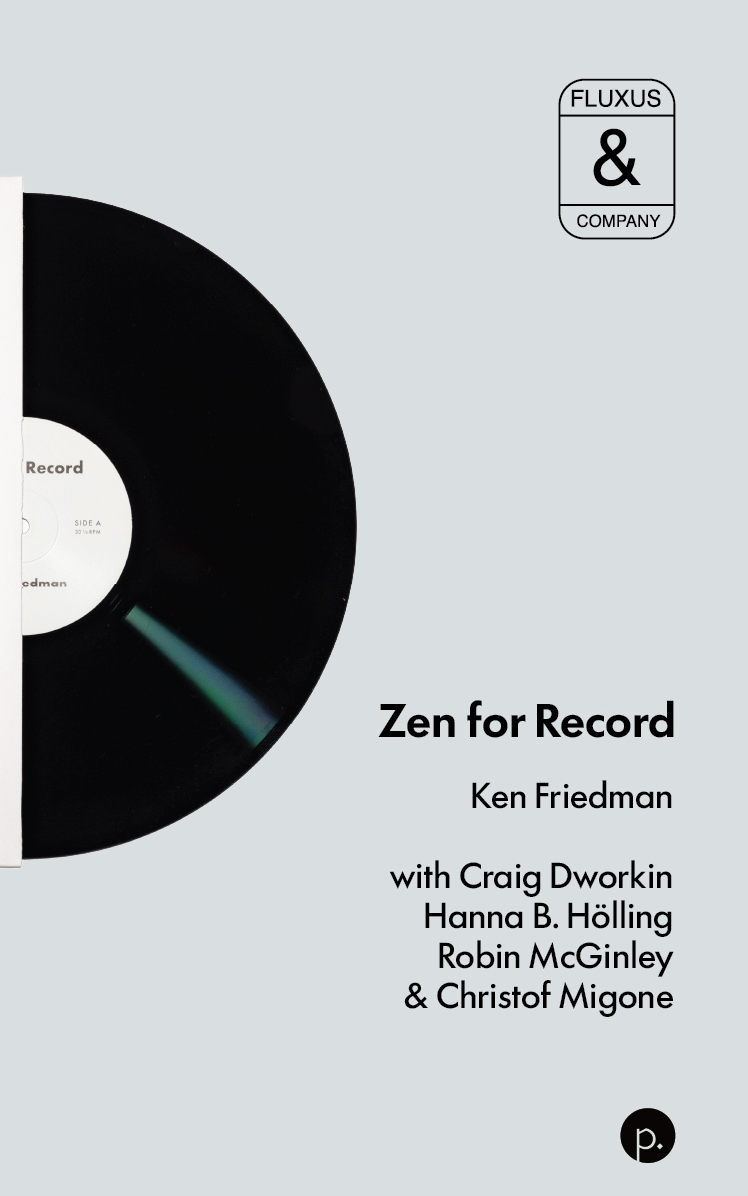
Zen for Record gathers five essays around Ken Friedman’s 1966 Fluxus event score instructing the production of “a phonograph record with no sound on it.” Originating as a found object, the work has migrated across six decades and multiple incarnations, from an unrealized concept to the LP edition that occasions this volume.
These essays accompany Friedman’s account of the Fluxus origins of the work, but they approach the silent record from radically different angles. Craig Dworkin situates Zen for Record within a broader aesthetics of negation and conceptual art’s engagement with the zero-degree of content. Christof Migone spirals through the paradoxes of inscribing nothing and the impossibility of a truly soundless playback. Robin McGinley traces a remarkable counterhistory of the silent record as pop artifact, from 1950s jukebox novelties to Vulfpeck’s album Sleepify. Finally, Hanna B. Hölling reads the work through sonic materialism, preservation theory, and the politics of silencing, asking what it means for a concept to survive the obsolescence of its successive carriers.
Touching on Fluxus event scores and Cagean silence, the political economy of streaming platforms, and the conservation of time-based media, these essays stage a sustained interdisciplinary meditation on silence as material, medium, commodity, and philosophical provocation.
Microscopic Life in Early-Twentieth- and Twenty-First-Century Literature and Performance

Editor: Liliane Campos
Editor: Sarah Bouttier
Editor: François-Joseph Lapointe
Editor: Sarah Montin
Cambridge, UK: Open Book Publishers, 2026
https://doi.org/10.11647/OBP.0509
This volume provides a groundbreaking interdisciplinary collection exploring how literature and performance engage with life at microscopic scales. Responding to an era dominated by planetary thinking, the volume turns attention to the invisible biological dimensions that shape our imagination of life, community, and ecology. Drawing from North American and European case studies, the volume’s essays and creative works examine how fiction, poetry, theatre, dance, installation art and museum practices render microbial and cellular processes perceptible, to enable new ethical and political relationships across species and scales.
Janky Materiality: Artifice & Interface
Author: J †Johnson
Earth, Milky Way: punctum books, 2026
https://doi.org/10.53288/0522.1.00
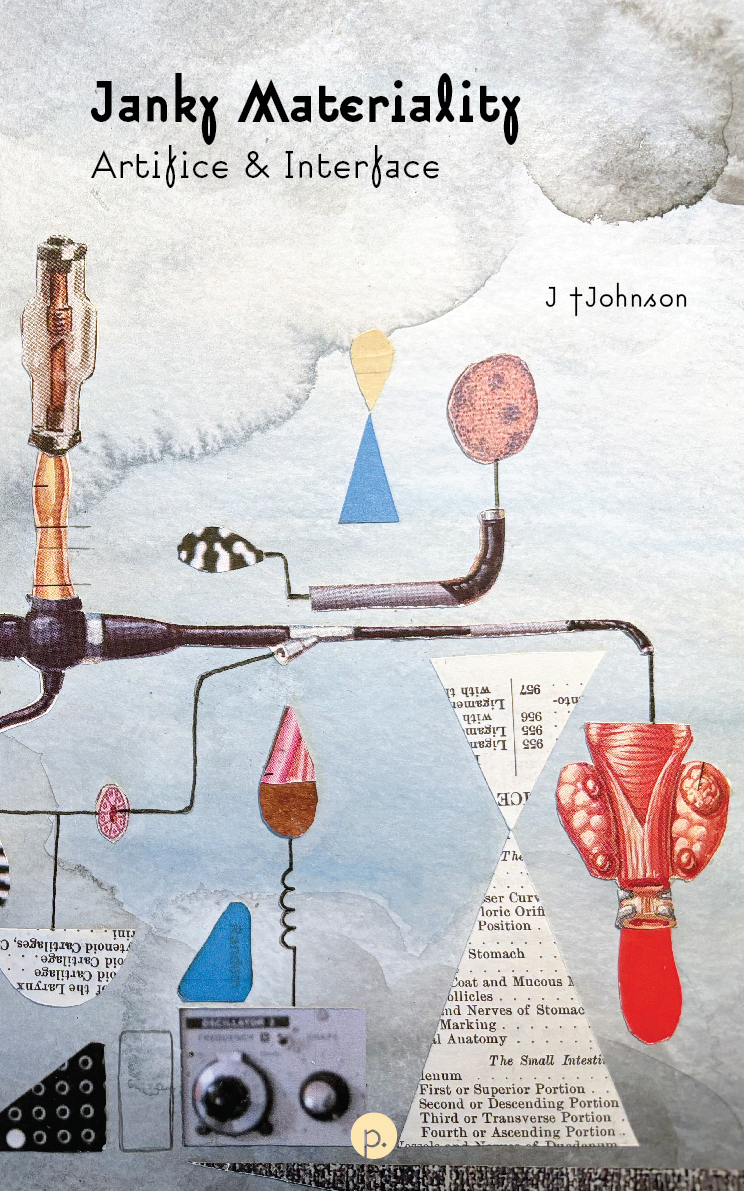
Janky materiality works by not working. It is the spirit in the machine, the ghost in language, the provisional operation. It is a musicological poetics run through a patchwork apparatus.
Janky Materiality: Artifice & Interface is a transdisciplinary performative critical investigation of analog-digital interface and materiality, language-oriented poetry and digital language art, experimental electronic music and modular synths, and the technology of film, album, and book.
Janky Materiality explores blurry intersections and cracked interfaces between page, screen and speaker, analog and digital practice. With reference to avant-garde poetics, digital language art, experimental electronic music and modular synths, chance operations and oracular knowing, Johnson thinks about the ways digital material practice extends the post-structural field, as page-based practices are (further) destabilized by computer-based experiments. Language itself is a janky technology that works (at least temporarily) through its own failures, so that digital mediation serves to further break and rewire language operations. Meanwhile, the book also explores sonification and the study of waveforms: hybrid audio-visual objects that can be materially sculpted and analyzed.
Ultimately, Janky Materiality presents a theory of becoming-digital, where interface is a matter of thinking and acting between and among embodied and conceptual, analog and digital realms, whether we are thinking about a technology like language, audiovisual phenomena, or a tool at hand.
Hydrology for Sustainability

Author: Stephanie Kampf
Cambridge, UK: Open Book Publishers, 2026
https://doi.org/10.11647/OBP.0551
Hydrology for Sustainability is an accessible textbook introducing the movement of water through Earth’s interconnected systems. Written for undergraduate students and readers with little prior technical background, it explains the key processes of the hydrologic cycle, from clouds, rainfall, snow and ice to soils, groundwater, rivers, floods and droughts. Rather than presenting hydrology solely through equations or engineering tools, the book places water science within the wider context of environmental sustainability and human society. It shows how hydrologic knowledge can help us understand urgent challenges, including water scarcity, flooding, climate change, urbanization, groundwater depletion and the ecological impacts of water infrastructure. Clear explanations are paired with practical examples, technical boxes and global case studies. Topics include fog harvesting, rainwater collection, snowpack monitoring, soil-water processes, groundwater flow, watershed management, flood risk and hydrological modelling. The book also highlights Indigenous and local water knowledge alongside modern scientific methods. Engaging, interdisciplinary and solutions-oriented, this textbook is ideal for courses in hydrology, environmental science, sustainability, geography and water resource management.
September 2026
Nicaragua Azul: Natural History of Nicaragua’s Subaquatic Ecological Heritage

Author: Fabio Buitrago
Author: Peltier Barahona
Cambridge, UK: Open Book Publishers, 2026
https://doi.org/10.11647/OBP.0547
This volume invites readers beneath the surface of a country shaped by two oceans, vast lakes, volcanic lagoons, rivers and estuaries.
Tributes in Honour of Maria Lis Lange: Scholar, Administrator, Activist, Leader
Editor: Jonathan Jansen
Editor: André Keet
https://doi.org/10.47622/9780639891453
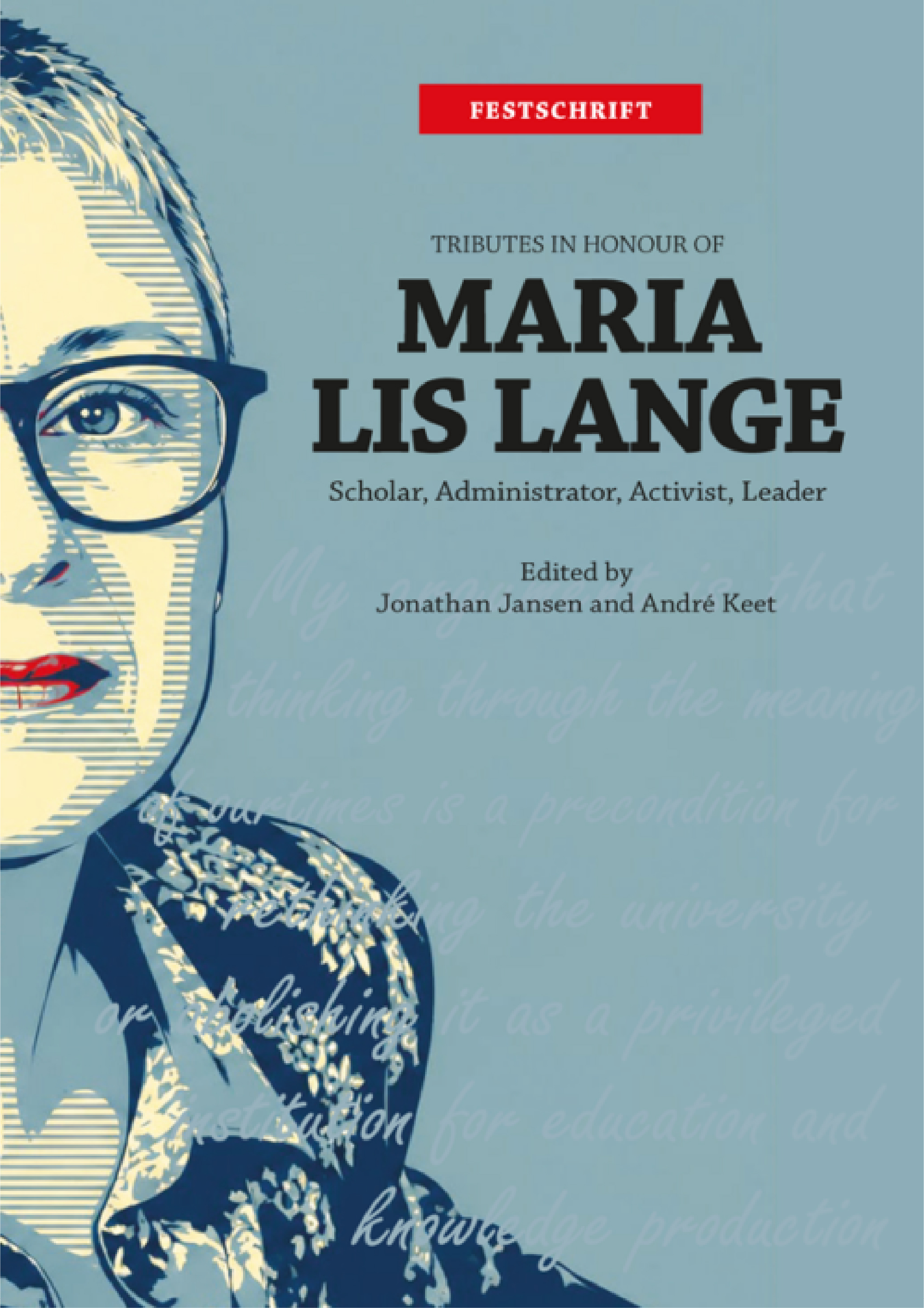
Through a critical engagement and treatment of the ideas, approaches, commitments and questions that defined Lis Lange’s work, this Festschrift brings together colleagues, collaborators, friends and fellow thinkers in a collection that offers a rich portrait of one of South African higher education’s most influential and uncompromising scholar-administrators.This book is a valuable resource for those interested in intellectually driven governance and leadership as forms of critical praxis and strategic institution-building.
A Refuge for Jae-in Doe and Other Fugues

Author: Seo-Young Chu
Earth, Milky Way: punctum books, 2026
https://doi.org/10.53288/0554.1.00
A Refuge for Jae-in Doe and Other Fugues is the lyric memoir of Korean American survivor Seo-Young (Jennie) Chu. It is also a meta-memoir, one that is aware of its makeshift nature, poses questions about the genre(s) it inhabits, and self-consciously reflects on what it means to write autobiographically. Throughout the book, Chu experiments with the first-person singular “I,” tracing the polyphonies always implicit in the memoirist’s first-person singular voice. Writing polyphonically allows Chu to explore the plurality within her “I,” the uncanny homes she has found in dissociation, the appeal of other-than-first-person pronouns as sites of autobiographical consciousness, as well as the literal and figurative fugue states—from spells of incantatory writing to oneiric re-namings of the self—in which Chu finds refuge from intergenerational distress and rape trauma.
Moving from one fugue state to another, Chu explores a wide range of topics relevant to her meta-autobiography, including the nature of time, the history of the sonnet, code-switching, suicidal ideation, the model minority myth, late-stage capitalism, institutional violence, rape culture, standardized tests, the Korean Demilitarized Zone, what it means to read a book, and what it means to be a self.
Embedded Pedagogies: Digital Humanities Teaching and the Infrastructure of Change

Author: Brandon Walsh
Cambridge, UK: Open Book Publishers, 2026
https://doi.org/10.11647/OBP.0544
This volume offers a timely and incisive exploration of teaching in an era of institutional instability and political pressure.
Customizing: Konfigurationen medialer Anpassung
Editor: Beate Ochsner
Editor: Markus Rautzenberg
Author: Johannes Bennke
Author: Andreas Beinsteiner
Author: Jacob Birken
Author: Bernd Bösel
Author: Mathias Denecke
Author: Sebastian Feil
Author: Anne Ganzert
Author: Ute Holl
Author: Jasmin Kermanchi
Author: Mona Leinung
Author: Monique Miggelbrink
Author: Stefan Rieger
Author: Jakob Schnetz
Author: Katia Schwerzmann
Digitale Medien sind heute weniger Werkzeuge der Produktion als Systeme der Anpassung. Unter dem Begriff des Customizing bündeln sich Praktiken der Personalisierung, Konfiguration und kuratierten Auswahl, die Wahrnehmung, Handlung und Subjektivität grundlegend verändern. Was als individuelle Passung und Selbstermächtigung erscheint, geht mit neuen Formen der Vorstrukturierung, Normierung und algorithmischen Steuerung einher.Das Internationale Jahrbuch für Medienphilosophie und Medienästhetik nimmt Customizing als zentrale Kategorie gegenwärtiger Medienkulturen in den Blick. Die Beiträge untersuchen, wie sich ästhetische Erfahrung, epistemische Ordnung und soziale Öffentlichkeit unter Bedingungen datenbasierter und KI-gestützter Medien verschieben. Im Zentrum steht dabei die Ambivalenz zwischen Autonomie und Abhängigkeit, Sorge und Kontrolle, Singularisierung und dem Verlust gemeinsamer Horizonte. Der Band versteht Customizing nicht als bloßes technisches Feature, sondern als medienphilosophisches Problem von grundsätzlicher Tragweite.
Bioethics in Apocalyptic Times

Author: Henk ten Have
Cambridge, UK: Open Book Publishers, 2026
https://doi.org/10.11647/OBP.0548
This book confronts one of the defining challenges of our age: how to think and act ethically in a world increasingly shaped by crisis, uncertainty, and a pervasive sense of vulnerability.
Selected Essays, 2019–2023
Author: Peter Valente
Earth, Milky Way: punctum books, 2026
https://doi.org/10.53288/0521.1.00
“There are floods that destroy entire contents of a library or publishing house; libraries and museums bombed during wartime; authors themselves demanding certain works or letters be burned at their death; those who attempt at their own risk to save what they can of a manuscript; manuscripts left in taxis and never to be found again; there are distracted painters who paint over an artwork not realizing what they are doing; finally, there are those works that never came to fruition for one reason or another, never to be known. We are given the misfires, the aborted works, the destroyed works, the mishandled works; the book is a catalogue of brutality, desperation, anger, shame and failure. It is like the negative of a photo, not the bright image we expect; it is the lack seething behind our feeling of abundance; it is a catalogue of the unfinished, the unknown, the unknowable. The effect of all the statements is quite devastating, and it reads like a kind of book of the dead. But it is also a magical book where the dead will live again in its pages.”
So writes translator and cultural critic Peter Valente, in an essay about Henri LeFebvre’s The Missing Pieces, a catalogue of lost and never realized artworks. Selected Essays, 2019-2023 collects Valente’s thinking and writings about books, films, poetry, digital art, dance, music, and other cultural objects that were important to him during the last decade. The essays cover a wide array of topics, from an examination of the new styles of music and dance in the UK to Gavin Douglas’s 16th-century translation of the Aeneid, from Bernadette Mayer’s Memory to John Ruskin’s work, from an in-depth analysis of John Wieners’s “A Poem for Painters” to an exploration of Maya Deren’s experimental filmmaking. In these essays, Valente explores books by contemporary experimental poets such as Will Alexander and Adeena Karasick as well as prose writers such as Cookie Mueller and David Wojnarowicz. Valente’s essays are not limited nor bound by current fashions in the poetry or prose worlds. His readings remain, as can be seen in his previous collection, Essays on the Peripheries, open-ended and adventurous.
Music and Dances from Central Nepal: The Works of Subi Shah: Volume 1

Editor: Anna Marie Stirr
Editor: Mason Brown
Editor: Hikmat Khadka
Editor: Lochan Rijal
Cambridge, UK: Open Book Publishers, 2026
https://doi.org/10.11647/OBP.0246
Music and Dances from Central Nepal is the first English translation of Shah’s works. This collection includes three published works— Madal, “Pangdure (Maruni) Folk Dances”, and Glimpses of Nepali Folk Songs—and three unpublished manuscripts— Introduction to Nepali Tunes, Sorati, and Basic Theory of Folk Dance.
Labyrinths: New and Selected Writings
Author: M. Munro
Earth, Milky Way: punctum books, 2026
https://doi.org/10.53288/0572.1.00
“Why are penetrating questions so much harder to formulate than penetrating answers?” critic Louis Bury asks. Why, indeed. It’s a great question, and also the throughline of Labyrinths: New and Selected Writings. In this collection, Munro formulates penetrating questions (punctums) again and again, and with style and economy. The stories that follow are never reduced to examples, illustrating one theory or another, but answer these questions in the most fitting way possible: by giving them an additional fillip, enriching each. This is the kind of twist only literature (and the humanities) can provide.
Labyrinths is Munro’s seventh book and continues his tradition of gnomic-styled writings that have been described as “intellectual origami,” “koan-like,” “flower-like,” and “rooted in sweetness,” with lines of inquiry that “auto-deconstruct, bridges crumbling as the author crosses them.” The current volume gathers into a fragrant florilegium the best of earlier writings with newer pieces that bring together in artfully whimsical fashion Aristotle, Gilles Deleuze, G.W.F. Hegel, Giorgio Agamben, Graham Harman, Fred Moten, the Mahābhārata, Marcel Proust, Andrea Long Chu, aesthetics, parables, kōans, autotheory, Franz Kafka, Ovid, Rey Chow, bell hooks, Lauren Berlant, Baruch Spinoza, and more.
August 2026
African Pastoral: Versions of Virgil’s Eclogues
 https://doi.org/10.53288/0574.1.00
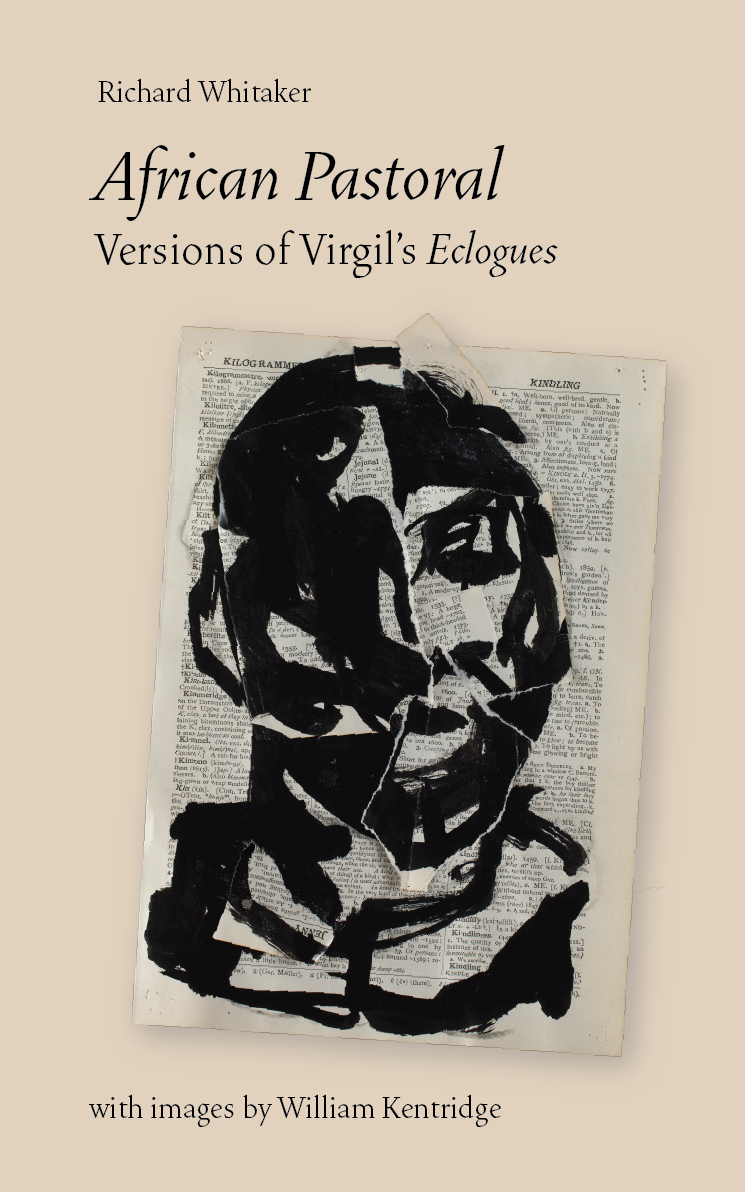
African Pastoral: Versions of Virgil’s Eclogues presents a fresh and unexpected version of the ten pastoral poems that comprise the Eclogues of Virgil (70–19 BCE). Although these poems focus on the lives of shepherds and goatherds, Virgil makes their seemingly circumscribed existence a mirror of the wider world, a world that is both his and ours. The Eclogues deal with subjects that remain vital in the twenty-first century: erotic passion of many varieties, transformation and metamorphosis, the torments of unhappy love, and the nature and power of poetry (represented by different kinds of pastoral song). With striking originality, Virgil also allowed contemporary power politics to erupt into the world of his herders and small-scale farmers, as they face confiscation of their grazing lands and fields.
South African classicist and translator Richard Whitaker has produced eminently fluent and creative versions of Virgil’s Eclogues. He reimagines the poems in an African landscape and evokes the troubled history of land dispossession in southern Africa, introducing local equivalents for much of Virgil’s Mediterranean flora and fauna and making frequent use of words drawn from indigenous languages that have enriched his country’s variety of English.
African Pastoral includes stunning images by South African artist William Kentridge, which interact with the versions of Virgilian pastoral in multiple ways, complementing and illuminating the poems, as well as raising points of contrast and difference between ancient and modern contexts.
Trespassing: The Subversive Travel of Indonesian Women in Literature and Performance

Author: Jennifer Goodlander
Cambridge, UK: Open Book Publishers, 2026
https://doi.org/10.11647/OBP.0542
This volume explores how Indonesian women writers and artists challenge the boundaries of home, nation, and identity through acts of movement, both real and imagined.
Unvoicing Migraine: A Study of the Failing Voice
Author: Mariske Broeckmeyer
Earth, Milky Way: punctum books, 2026
https://doi.org/10.53288/0536.1.00
These writings spring from an observation: When migraine arises, the voice fails. It does so on many levels, ranging from a vocal-technical disintegration to migraine-specific symptoms like dysarthria and aphasia, up to the muteness forced upon the sufferer by stigmatization. As a migraine-suffering singer, Mariske Broeckmeyer witnesses and experiences these alterations. Frequently, routinely, and almost faithfully, she retreats to the blackened bedroom when migraine manifests. Lying in silence, she notices how little of her vocal instrument remains intact and how distorted our relations become under these circumstances. Migraine mutes—it occupies the body and leaves muscles, lungs, larynx, and tongue under its command. In the attempt to describe these sufferings, Broeckmeyer has indeed stammered and fallen silent, unable to name the pain. But could it be that this failure holds some sort of potential? What might vocal failure reveal about the nature of the voice?
To these questions, Unvoicing Migraine lends an ear. Shuttling between theoretical findings and artistic practice, the book turns to concepts provided by voice theory, disability studies, and queer theory to engage in an artistic research that studies the devocalizing impact of migraine. The book also attempts to redefine the artistic practice of a singer, the author, when her vocal apparatus falters: it questions the singer’s relation to the stage and challenges the boundaries of performance. These aspects of vocality were not merely approached through an autotheoretical discourse, but through the creation of music and sound art that capture the failing voice and amplify it. Ultimately, Unvoicing Migraine looks at what lies beyond migraine, and makes note of its consequences and residues: stains the acid left on the carpet that transform into a woolly eye whose gaze morphs into a mouth that raves in a language we cannot always understand, but which Broeckmeyer transforms into migraine opera.
The Doctrine of One: Personal Encounters with Film, Art and Music

Author: Michael Beckerman
Cambridge, UK: Open Book Publishers, 2026
https://doi.org/10.11647/OBP.0510
This volume is a bold and original meditation on how we interpret art, music, and culture—and what it means to listen, see, and feel differently from others. Drawing on Czech history and aesthetics, the book moves from filmmaker Hugo Haas’s coded tributes to his murdered brother, to the haunting ex libris designs of Josef Váchal, to the deeply personal resonances of Schubert’s chamber music, Dvořák’s cello concerto, and Gideon Klein’s tragic Terezín Trio. Across these vivid case studies, the author asks whether meaning in art can ever be shared—or whether it always belongs to the individual observer.
The Diaries of Anthony Hewitson, Provincial Journalist, Volume 2: 1891–1912
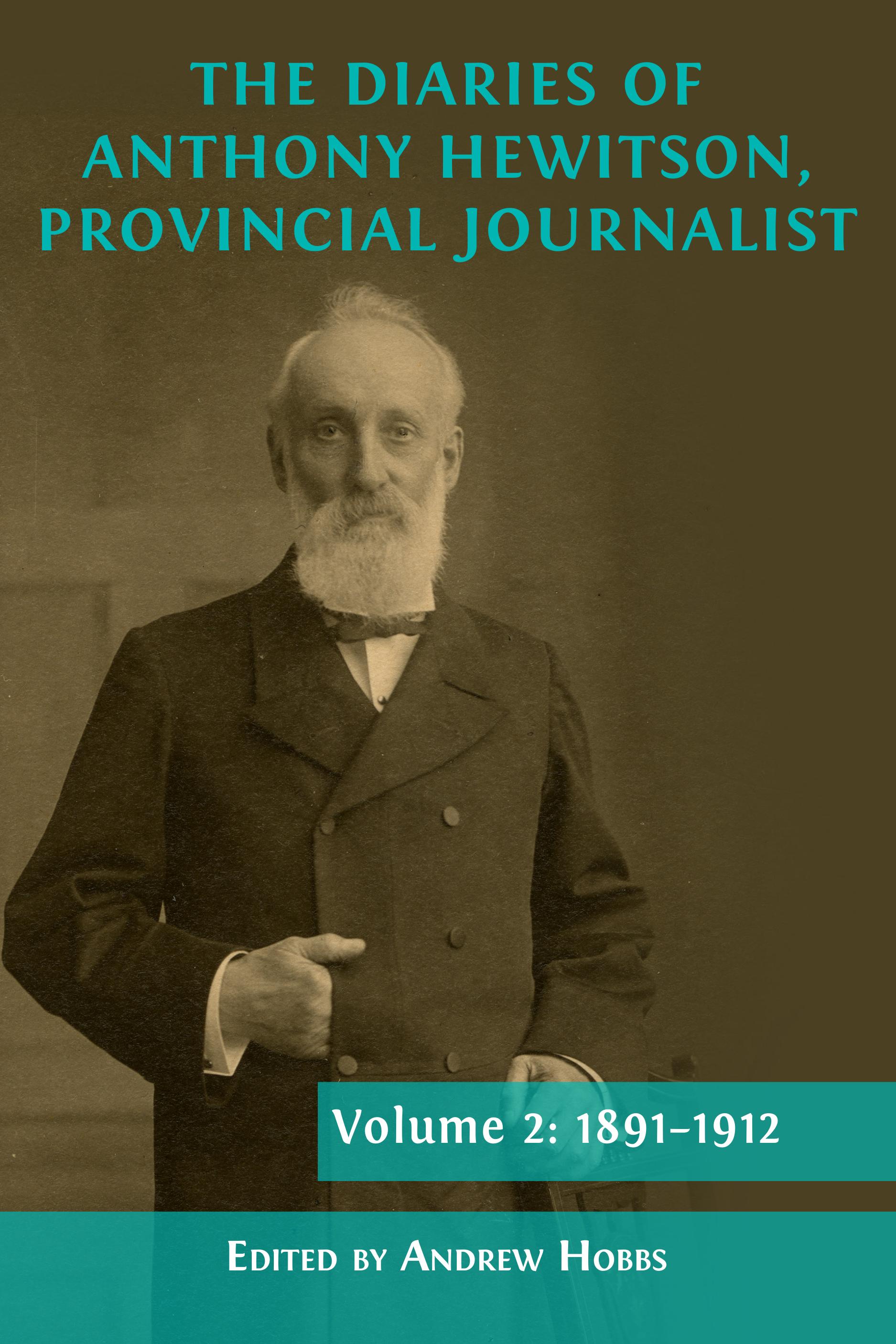
Editor: Andrew Hobbs
Cambridge, UK: Open Book Publishers, 2026
https://doi.org/10.11647/OBP.0270
Journalist Anthony Hewitson (1836-1912) worked in one of the largest sectors of the periodical press, provincial newspapers. His diaries, written between 1865 and 1912, reveal the people, processes and networks involved in the creation of Victorian newspapers.
Orienting Public Policy: Ethicists in Democratic Public Reasoning

Author: Frans W.A. Brom
Cambridge, UK: Open Book Publishers, 2026
https://doi.org/10.11647/OBP.0541
In an era of increasing polarization, the book calls for a renewed understanding of ethics as a reflective public practice. It offers guidance for philosophers, policymakers, and advisors seeking to sustain a democratic ethos grounded in equality, dignity, and the rule of law.
My 1980s Gayboy Playlist

Author: Arved Ashby
Earth, Milky Way: punctum books, 2026
https://doi.org/10.53288/0535.1.00
In this remarkably intimate book, My 1980s Gayboy Playlist, award-winning music writer Arved Ashby muses over pieces that impacted his sexual and musical awakenings as a troubled gay adolescent—pieces by Tchaikovsky, Chopin, Beethoven, Anton Bruckner, Alban Berg, Prince, Kurt Cobain, and Tom Petty.
Ashby shares memories both intimate and far-ranging, but My 1980s Gayboy Playlist is not a memoir. Instead of trying to amplify an outwardly uneventful life, the author reengages with and renegotiates eight still-simmering touchpoints—some old musical flames, a few abusive relationships among them. Ashby focuses on desire as it spilled messily across different avenues of expression, seeking connections between erotic experience and musical passion.
For Ashby, as a high school student in a small, rural Midwestern town in the early 1980s, choosing Alban Berg records over Van Halen counted as a perversion. When he recognized Tchaikovsky’s melodic fixations and Prince’s and Chopin’s musical fires, he better understood his own kinks. As an inadequate piano student and a shy virgin on tricyclic psych meds, his lack of physical success taught him the limitations of the body but also showed the capaciousness of queer failure.
It was music that showed him how queerness insists on misappropriation, mishearing, and reading against the grain. Musicality, like sexual expression, amounts to a kind of role-playing— involving penetration and violation of identity as well as validations of the self. The author’s queer musical loves have shown him the vital beauty of muck, unreason, and noise, and as an imaginative writer, Ashby offers the liquid self-reflexivity of Proust and the auto-theory provocations of Maggie Nelson, Paul Preciado, and McKenzie Wark. His prose is poetic and playful, and now and again chaotic. He outs himself in and through his work, with humor and radical intimacy.
My 1980s Gayboy Playlist ultimately illuminates what queer theorist Leo Bersani called the gayboy’s inelegant “apprenticeship in desiring.” Ashby’s closest partners growing up were fantasy, seclusion, and music-dependency, and he found his awkward bliss at the start of the era that witnessed AIDS and the rise of the Moral Majority. In Ashby’s early exurban environment, gayness was a thing feared, because unseen and unfathomed, but his musical intimacies made his personal closet endurable. They also helped him to survive his mis-education, to overcome failures of expression, and to craft a sexual awakening into something more rich and more strange.
Mobile Personalization: The History and Theory of Mobile Streaming Media
Author: Justin Grandinetti
Author: Charles Ecenbarger
https://doi.org/10.64629/pf8605cb.10dcf8f3
People were watching and listening on the move long before the iPhone’s launch. The world of always-on streaming, accessible anywhere, has a pre-history: magic lanterns, drive-in theaters, and portable radios. In Mobile Personalization, Justin Grandinetti and Charlie Ecenbarger place Netflix, YouTube, Spotify, TikTok, and other corporate claimants in a lineage that includes the build-out of sprawling, invisible infrastructures—undersea cables, server farms, and adtech. These “architectures of mobility,” together with their Silicon Valley underwriters, make seamless, algorithmic streams possible and profitable. The upshot is an evolving regime of mobile personalization, with entertainment for consumers and data-driven monetization for companies. Mobile Personalization recasts foundational ideas from Raymond Williams, including “flow” and “mobile privatization,” to account for the algorithmic delivery of targeted video and audio to lucrative audiences. As this important new book argues, the mobile streamers have delivered convenience, but also audience fragmentation and behavioral capture.
Jorge Luis Borges: At Play with Mental Models of the World
Author: Luis O. Arata
Earth, Milky Way: punctum books, 2026
https://doi.org/10.53288/0542.1.00
Jorge Luis Borges: At Play with Mental Models of the World explores mind-world relations through the creative writings and reflections of the iconic Argentine author, along with insights from corresponding findings in the field of cognitive studies. A selection of representative works—stories, poems, and essays—illuminates features of the constructive imagination that Borges sets in motion to personally blend mind and world, a venture to which he dedicated his life to the very end. This book is for readers from a broad range of backgrounds, interested in the interactive workings of mind and world through fiction, the imagination, and embodied cognition.
Over the years, Borges playfully created and tinkered with models of the self, time, fiction, reality, history, solitude, and reciprocity, among other cognitive objects. Arata focuses on a selection of representative works of Borges to examine how he modeled and then remodeled, over time, his perceptions of the world and his presence in it. Of particular importance was the onset of blindness halfway through his literary life, which led him to playfully remodel certain aspects of his early views of experiencing the world. There was also his surprising partnership with María Kodama toward the end of his life, when he went from prizing solitude to experiencing a sense of reciprocity hardly felt before. Arata concludes this exploration with a view of Borges’s burial headstone that is in stark contrast to his youthful idea that his death would happen in Buenos Aires, with his vanishing engraved in cold marble. Instead, Borges chose to pass away in Geneva, and was buried next to an earthy, rough headstone engraved simply with what could be seen as his playful final story.
Ultimately, Arata’s book asks, to what extent does the mind shape our perception of the world? Through his work, Borges provides us with a personal, passionate example of how fiction and reality blend to create a multiplicity of striking meanings and his writings trace the poignant human quality of a life devoted to conjuring meaning through the interactions of narrative models that emerge from weaving dreams, memories, observations, reflections, and choices.
Bourdieu and Literature

Author: John R.W. Speller
Cambridge, UK: Open Book Publishers, 2026
https://doi.org/10.11647/OBP.0522
This study explores the impact of literature on Bourdieu’s intellectual itinerary, and how his literary understanding intersected with his sociological theory and thinking about cultural policy. This is the first full-length study of Bourdieu’s work on literature in English, and it provides an invaluable resource for students and scholars of literary studies, cultural theory and sociology.
Applied Psychology in Context: Stories and Lessons from Palestinian Villages

Author: Caesar Hakim
Author: Hamish J McLeod
Author: Mohammad Alkhatib
Cambridge, UK: Open Book Publishers, 2026
https://doi.org/10.11647/OBP.0546
This book is an innovative, practice-oriented resource that reframes how psychology is applied in complex, real-world settings.
July 2026
Malleus Daemonum: The Hammer of Demons
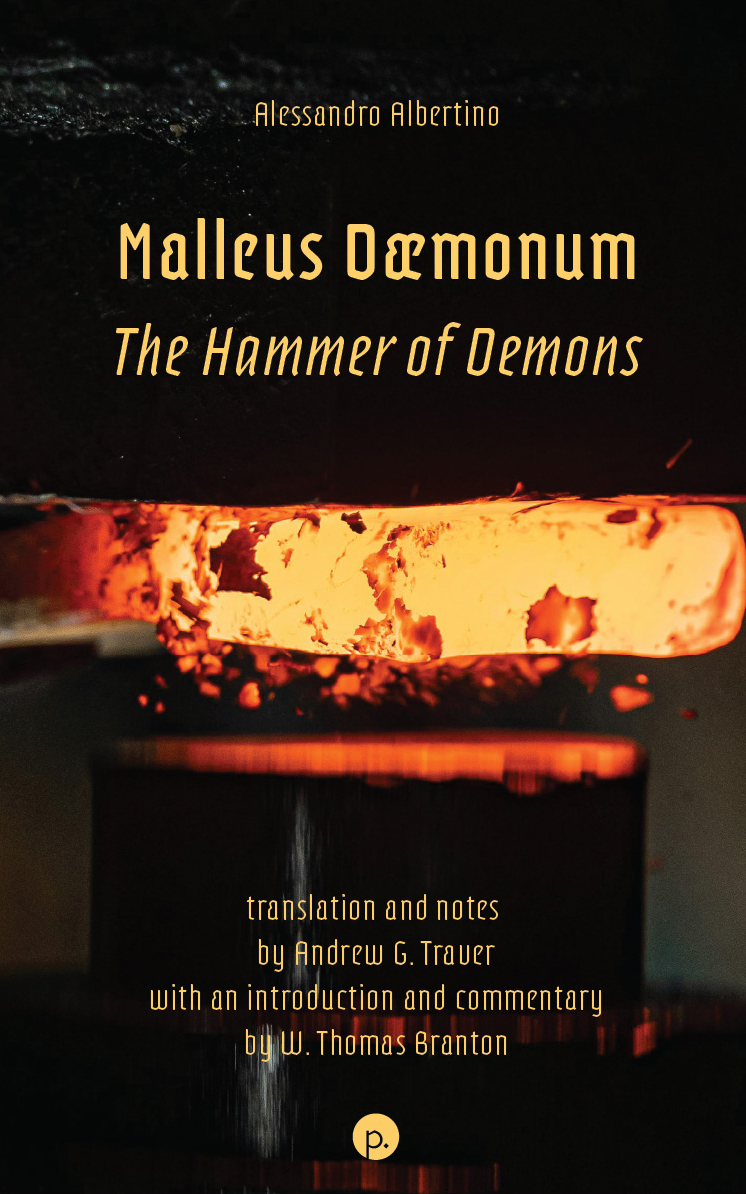
Author: Alessandro Albertino
Translator: Andrew G. Traver
Introduction by: W. Thomas Branton
Earth, Milky Way: punctum books, 2026
https://doi.org/10.53288/0565.1.00
The Malleus Daemonum provides an exciting introduction into the religious world of early modern Italy. It consists of a series of personal exorcisms which the Italian Observant Franciscan Alessandro Albertino composed and which he claims have proven themselves by experience. It bears witness to the end of a period in which priests could freely compose their own exorcisms as a regular part of their pastoral functions.
Albertino’s exorcisms faithfully follow the Passion narrative in the four Gospels designed both to parallel and to empower the Vulgate text. His strategy is to employ the words and instruments used against Christ by his detractors against the demons occupying the possessed individual in order to expel them. Those words and weapons which were once used to torment, harass, and crucify Christ thus become spiritual weapons which the exorcist may use to treat their patient. Albertino introduces each exorcism with an epigram based on Classical mythology followed by litanies, invocations, and prayers, and he also includes a general exorcism to expel demons from specific parts of the body, along with general blessings and prayers to drive out all sorcery and diabolical intervention from particular articles of clothing.
This edition comprises a comprehensive historical and theological introduction, a Latin edition, and the first-ever English translation of The Hammer of Demons. The translation, research, and commentary unveil a long-buried gem of the seventeenth century, offering readers an alluring narrative about the evolving face of the ancient convention of exorcism. More than just a book, this introduction, edition, and translation are an essential contribution to the understanding of the intersection of exorcism, history, and religion in early modern Italy.
The Khan’s Pifferi: Reading about the Musics of Asia in Late Fifteenth-Century Italy

Author: Tim Shephard
Author: Chenxi Xiao
Cambridge, UK: Open Book Publishers, 2026
https://doi.org/10.11647/OBP.0531
This volume explores what Italian readers of the 1480s and 1490s could learn about Asian music through the expanding medium of print.
Rock-time (Vol. 4 in the FicSci Series)
Editor: Mehita Iqani
Editor: Wamuwi Mbao
https://doi.org/10.47622/9780639891422
What is science communication? This collection, the fourth in the series, continues to argue that it can be creative writing aimed at the heart, rather than information directed to the mind.
The Specter of AIDS

Author: Néstor Perlongher
Translator: Jorge Sánchez Cruz
Afterword by: Gabriel Giorgi
Earth, Milky Way: punctum books, 2026
https://doi.org/10.53288/0548.1.00
The Specter of AIDS is a transdisciplinary text originally written in 1980s Brasil in a time of pandemic emergency. It situates how HIV/AIDS reconfigured intimacy, sexuality, and power while also providing a minoritarian theory of desire lived by dissident sexualities in 1980s Latin America.
Perlongher’s paper exposes a new barometer of life undergirded by medico-scientific reason, religious ideology, and morality — in other words, a re-actualization and intensification of normative reason. In nuanced prose combined with wit, rigorous scholarship, political alertness, and poetics, Perlongher delineates how HIV/AIDS serves as a blueprint for how viral threats shed light on the inequitable unevenness of this world.
Written in Portuguese in 1987 and then published in Spanish in 1988, this translation offers an un/timely reading for the 21st century as it shows how new contaminants threaten national public health’s paradigms of gendered and racialized structures: their borders, bodies, and good comportment.
Autotheory and Its Others
Editor: Becky McLaughlin
Editor: Eric Daffron
Editor: Maria Gil Ulldemolins
Editor: Kris Pint
Earth, Milky Way: punctum books, 2026
https://doi.org/10.53288/0530.1.00
Ever since Maggie Nelson’s Argonauts gave the word fresh currency a decade ago, autotheory has infiltrated scholarly, literary, and artistic practices. Autotheory and Its Others contributes to this nascent metacritical conversation. An inclusive discourse, autotheory embraces its uncanny double, allotheory, and, thus, this collection invites to the table a host of uncanny others: psychoanalysis, queer theory, and crip theory as well as art writing, postcriticism, and autofiction, among other genres and discourses.
Bringing together four editors and thirteen contributors from both sides of the Atlantic, this collection of critical and creative-critical essays grapples with what it means to couple the personal with the theoretical. The volume’s chapters feature geographical settings as far-flung as New Zealand, Iran, and Mississippi and its wide-ranging topics include anecdotal theory and dialogia–theoria, the bodymind and illness, artificial intelligence and experimentation, accident and fantasy, collages and fragments, unlearning and autopractices, unknowing and the unconscious, uncertainty and art writing, narcissus and trauma, kudzu and pedagogy, memory and legend, autofabulation and religion, and lo-fi critique and academia. Ultimately, Autotheory and Its Others showcases this emergent genre’s diversity while also charting its multivalent future directions.
The Philosophy of Julia Wedgwood: Imperfect Antithesis

Author: Alison Stone
Cambridge, UK: Open Book Publishers, 2026
https://doi.org/10.11647/OBP.0543
Combining philosophical analysis with innovative digital methods for recovering lost texts, this study restores Wedgwood as a major nineteenth-century philosopher and offers a compelling new lens on moral and historical experience.
Communication Conduct in an Island Community
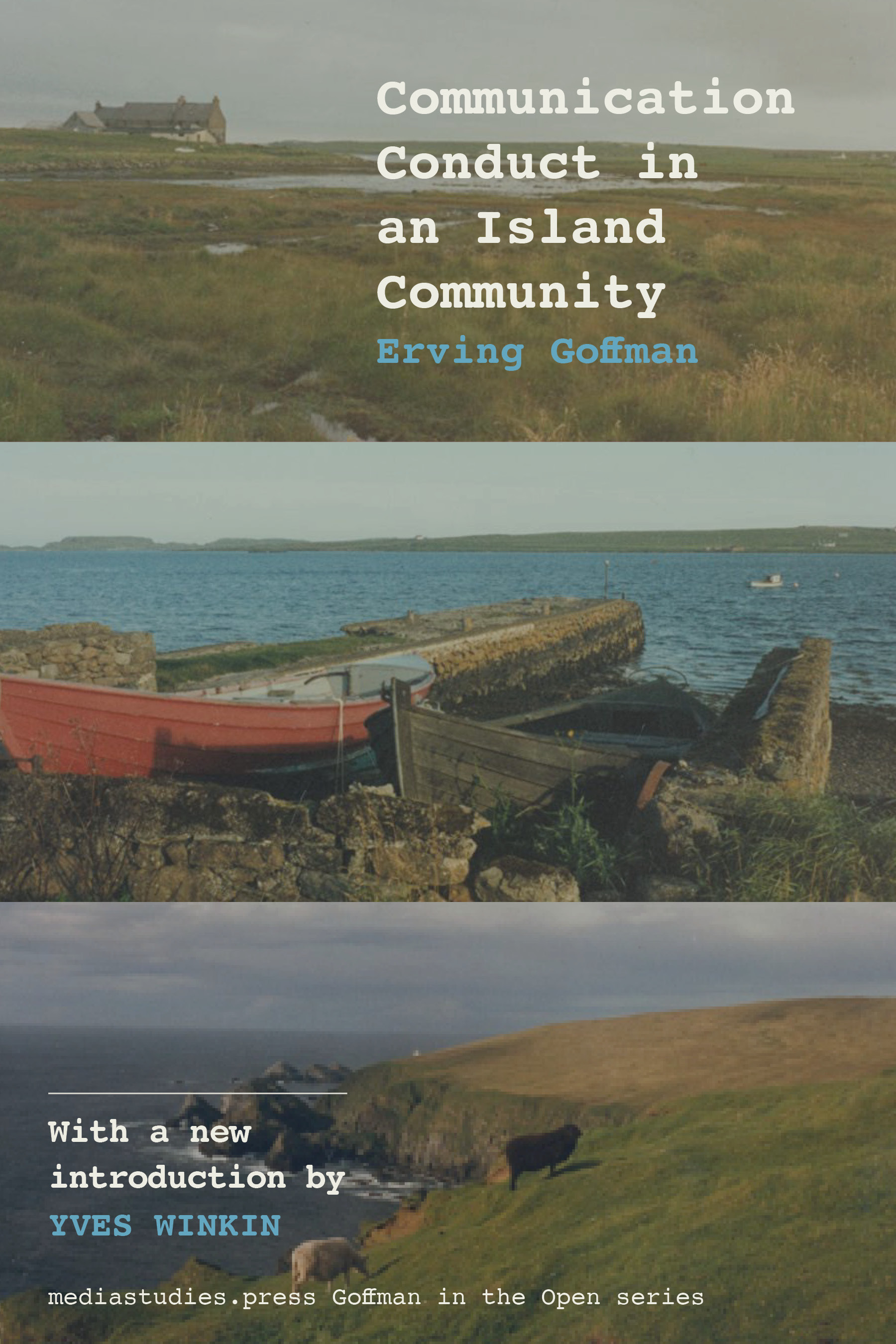
Author: Erving Goffman
Introduction by: Yves Winkin
https://doi.org/10.64629/3f8575cb.baaa50ag
A republication of Erving Goffman’s landmark 1953 dissertation, with a new introduction by Yves Winkin.
Rethinking Social Justice: Theory and Action in an Age of Transition

Author: Michael Karlberg
Author: Derik Smith
Cambridge, UK: Open Book Publishers, 2026
https://doi.org/10.11647/OBP.0536
This book offers a compelling and original rethinking of social justice at a moment of global uncertainty and transformation. Tracing the emergence and evolution of modern social justice discourse, it addresses two fundamental questions: what ends should we aspire toward, and what means are most effective in pursuing them? Moving beyond familiar critiques of injustice, the authors identify a shared, though often implicit, horizon that diverse traditions of thought all orient toward: contributive justice. This positive vision of social justice centers on the creation of social conditions that enable every individual and group to develop their capacities to contribute meaningfully to collective flourishing.
Verbal Multi-Word Expressions in Corpus Languages: Data, Methodology, and Analysis

Editor: Victoria Beatrix Fendel
Cambridge, UK: Open Book Publishers, 2026
https://doi.org/10.11647/OBP.0478
This volume brings together a diverse, interdisciplinary cohort of scholars to shed new light on verbal multi-word expressions in corpus languages such as Greek, Latin, and Egyptian.
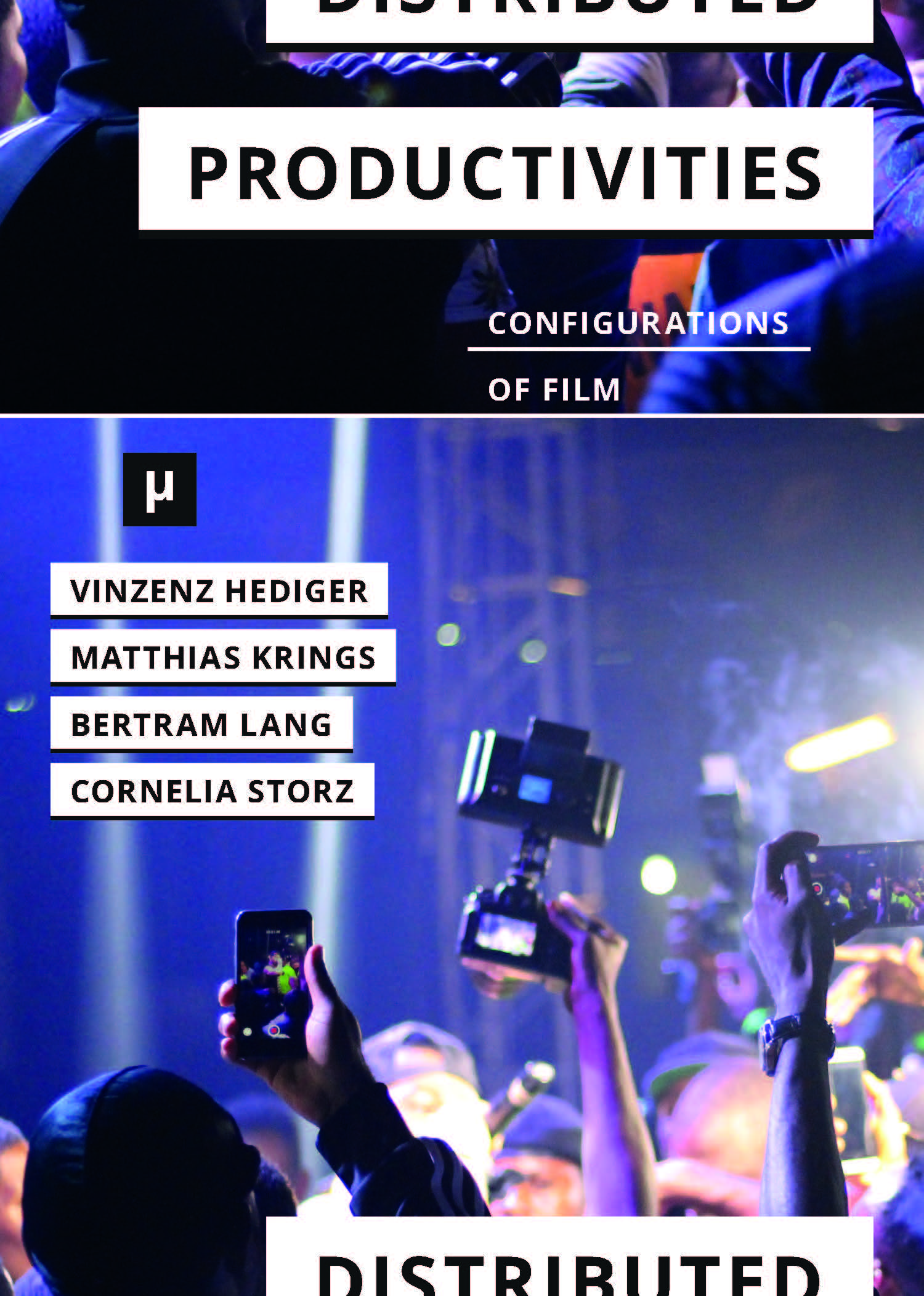
Distributed Productivities: Digital Transcreation and the New World Order of Cultural Production
Editor: Vinzenz Hediger
Editor: Matthias Krings
Editor: Bertram Lang
Editor: Cornelia Storz
Author: Tabitha Adler
Author: Añulika Agina
Author: Yonson Ahn
Author: Egbert Amoncio
Author: Sonia Campanini
Author: Casandra-Angela Chistinean
Author: Bakar Abdul-Rashid Jeduah
Author: Nico Nassenstein
Author: Izuu Nwankwọ
Author: Ute Röschenthaler
Author: Artemis Saleh
Author: Tom Simmert
Author: Solomon Waliaula
Author: Usaku Wammanda
Lüneburg: meson press, 2026
Digital distribution produces new global cultural flows from urban centers like Lagos, Mumbai or Seoul. But it also enables new forms of distributed production in which cultural entrepreneurs cooperate across continents and challenge and expand established notions of cultural and political space. In the “new world order of cultural production” (Fatima Bhutto) cultural specificity is no longer a matter of physical location, but of digital transcreation, the transport of meaning across multiple cultural contexts.The contributions to this volume trace such transports across Africa, Asia, and beyond.
Teaching Dido: Critical Perspectives on Aeneid 4

Editor: Ingo Gildenhard
Cambridge, UK: Open Book Publishers, 2026
https://doi.org/10.11647/OBP.0540
A companion to Virgil, Aeneid 4, with Study Questions, Vocabulary, and Commentary (OBP 2026), Teaching Dido includes five essays that explore aspects of Virgil’s poetry in a student-friendly way. They range from issues in poetics (verse design, allusion) to key themes (‘historiographical Dido’, religion, pietās). Six reprinted scholarly articles follow, allowing students and their teachers to engage directly with some of the research that informs the essays and the commentary and to broaden their appreciation of Dido, the Aeneid, Virgil, and the wider historical context. Topics covered include the ethics of hospitality, the interface of intertextuality and psychology in the construction of character, Carthage and Rome as imperial powers, racecraft in Aeneid 4, Virgil’s authorial self-fashioning and negotiation of the Augustan new normal, the myth of Troy in Rome’s cultural imaginary, and Dido’s place within Virgil’s philosophy of history.
June 2026
Digitale Gewalt: Politisierungen affektiver Öffentlichkeiten

Author: Julia Bee
Author: Jasmin Degeling
Author: Jennifer Eickelmann
Author: Katrin Köppert
Lüneburg: meson press, 2026
Digitale Gewalt, die sich in Form von Deepfakes, Doxing oder Voice Cloning gegen marginalisierte Gruppen richtet, ist politische Gewalt. Ihre gegenwärtige Konjunktur geht Hand in Hand mit der Proliferation rechter und faschistischer Politiken. Dieser Band untersucht Misogynie und Transfeindlichkeit, Rassismus und Faschismus unter digitalen Bedingungen und ordnet diese Gewaltformen mithilfe intersektionaler Theorien ein. Die Beiträge beleuchten die Regulierung und Politisierung Sozialer Medien, Rassismus in digitalen Erinnerungskulturen und kritische Politische Bildung. Durch diese Analysen interveniert der Band in Szenarien ungleich verteilter politischer Gewalt und zeigt auf, wie unerlässlich intersektionale Perspektiven der Gender Media Studies für eine zeitgemäße Analyse digitaler Medienkulturen sind.
Homo Textor: Weaving As (Technical) Mode of Existence

Editor: Ellen Harlizius-Klück
Editor: Annapurna Mamidipudi
Editor: Giovanni Fanfani
Editor: Alex McLean
https://doi.org/10.28938/9781912729425
Homo Textor aims to exemplify how weaving as a (technical) mode of existence provides concepts that help to rethink Homo faber and the way the Moderns talk about technology. It shows weaving as histomorphism, a generative process where intelligible forms grow out of the loom-weaver-threads system
Dotawo: A Journal of Nubian Studies 9: Nubian Homescapes

Editor: Anna Lucille Boozer
Editor: Anne M. Jennings
Earth, Milky Way: punctum books, 2026
https://doi.org/10.53288/0578.1.00
Dotawo: A Journal of Nubian Studies offers a platform in which the old meets the new, in which archaeological, papyrological, and philological research into Meroitic, Old Nubian, Coptic, Greek, and Arabic sources confront current investigations in modern anthropology and ethnography, Nilo-Saharan linguistics, and the critical and theoretical approaches of postcolonial and African studies. Dotawo gives a common home to the past, present, and future of one of the richest areas of research in African studies. It offers a crossroads where papyrus can meet the internet, scribes meet critical thinkers, and the promises of growing nations meet the accomplishments of older kingdoms.
The ninth issue of Dotawo takes a long-term perspective on Nubian houses and households to explore the distinctive material, visual, and phenomenological worlds of Nubian homescapes. A “homescape” is an array of features related to the home. It is the socially constructed space of human activity, understood as having spatial, conceptual, and emotional boundaries and delimitations. Contributors to this volume embrace the dichotomy of homescapes, demonstrating how Nubians adapt their homescapes over time and space even while adhering to a core identity. The cross-disciplinary contributions to this volume include sociological, anthropological, archaeological, and linguistic approaches to the topic, as well as photographic essays, artwork, and fiction.
Inner Conflicts
Author: Sana Sheikh
Earth, Milky Way: punctum books, 2026
https://doi.org/10.53288/0464.1.00
What should I do? What is the right thing to do? What do I do when I don’t know what to do?
The difficulty in answering these questions does not come from a lack of knowledge but a deeper problem that requires us to look inward (and outward).
Inner Conflicts is meant to be read in times of upheaval. It traverses jagged terrain, giving voice to the unspoken doubts and contradictions that underlie our dearly held projects. Drawing from psychoanalytic theory, five chapters unpack, process, and – like psychoanalysis – free associate to the fundamental tensions in our lives that refuse resolution. Neither a simple critique nor defense, Inner Conflicts contends that only through acknowledging all parts of the argument within us can we fully attend to the urgencies and particularities of ethical and political life.
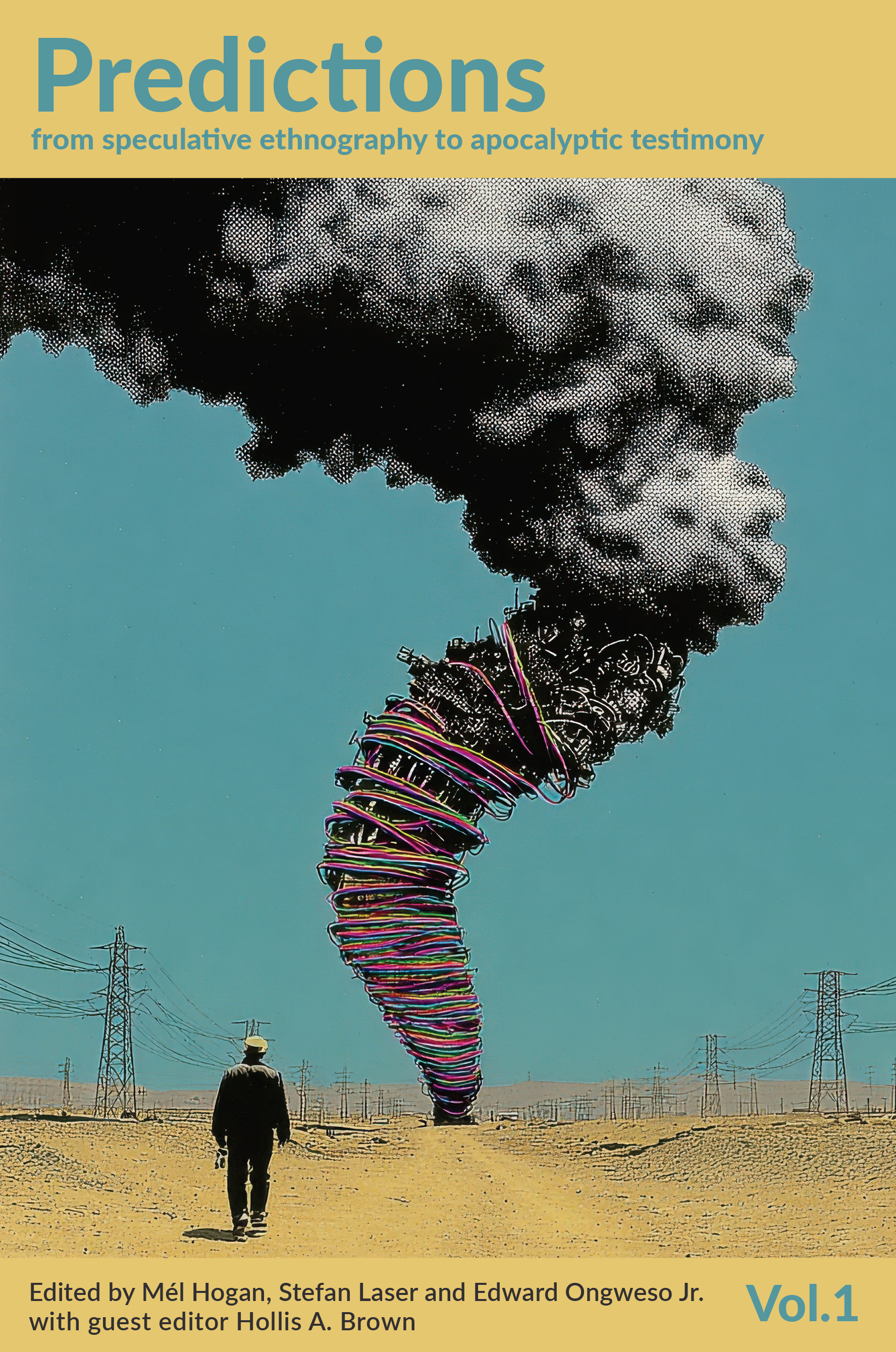
Predictions: Volume 1: From speculative ethnography to apocalyptic testimony
Editor: Mél Hogan
Editor: Stefan Laser
Editor: Edward Ongweso Jr.
Manchester, UK: Mattering Press, 2026
https://doi.org/10.28938/9781912729463
We make Predictions as a gesture of hope that goes against the current momentums that trouble us: planetary harm, war, AI hype, viruses, despair. The authors assembled in this series critically and creatively engage with what this uncanniness feels like, and how it helps us to redirect our engagement.
Virgil, Aeneid 4, with Study Questions, Vocabulary, and Commentary
 https://doi.org/10.11647/OBP.0527
Poetry that has fascinated readers since antiquity is here presented in an innovative, student-friendly edition, with study questions, vocabulary, commentary and visual material designed to facilitate engagement with Virgil’s text.
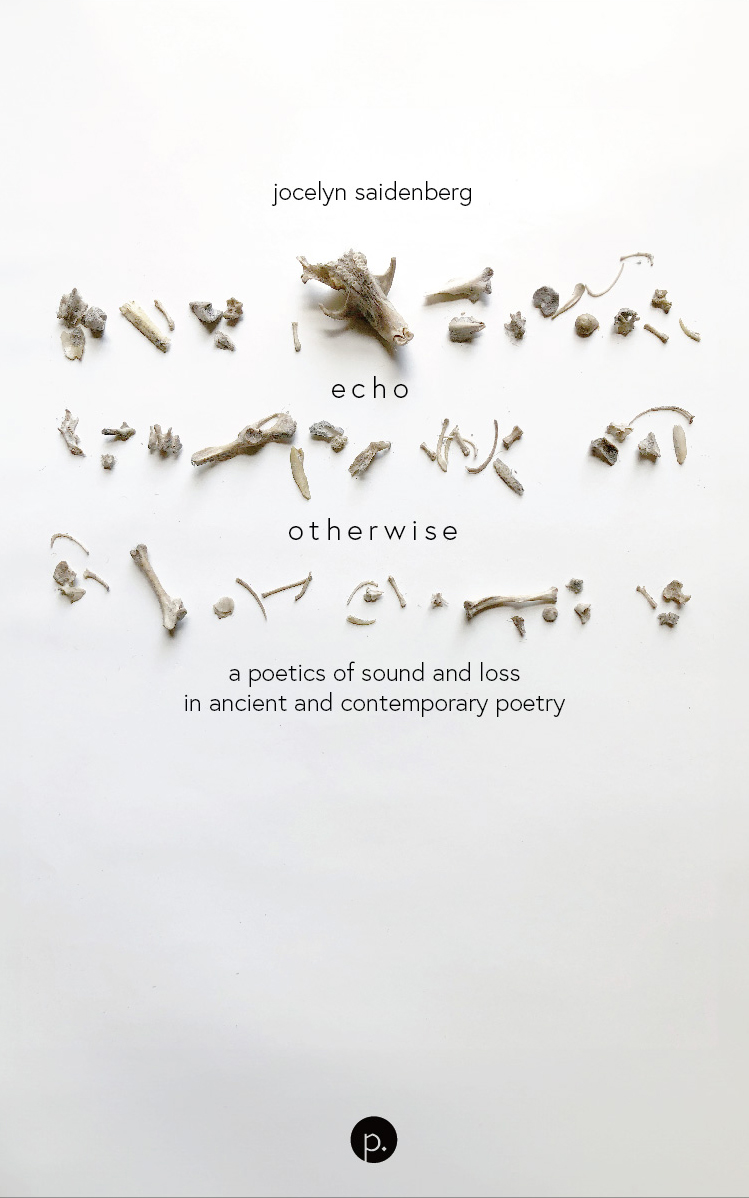
Echo Otherwise: A Poetics of Sound and Loss in Ancient and Contemporary Poetry
Author: Jocelyn Saidenberg
Earth, Milky Way: punctum books, 2026
https://doi.org/10.53288/0493.1.00
At the heart of this book is a story about reading, about reading and pedagogy, about pedagogy’s readers, about readers who listen, listening while reading, about poems and their sonic materials, about the demands that poetic sounds make on writers and readers, about seduction, about echoes and repetition, about the resounding qualities of poetic matter. How might the inarticulate (or inarticulable) communicate in the sounds of poetry? And how might poetry teach us to attend to what is beyond language or even beyond figuration? Reading for the excluded or absent, that which remains after erasure, might be said to be a hermeneutical commandment. But how might we “read” for the faint echoes of words, the shared, phonic resonances that remain and continue to sound afterwards?
In Echo Otherwise, framed as a series of slow, recursive readerly meditations, Saidenberg sets about attending to these questions by bringing together two writers, Lucretius and Ferdinand de Saussure, whose selected works surprisingly disclose a set of interconnected and overlapping concerns with how sound works and in what sounds and resounds in the universe of poems and atoms, and they are also attentive to what sound tells us about poems and atoms. In addition to her readings of Lucretius and de Saussure on sound in the company of other readers — as reading, for Saidenberg, is a collective affair — there are garden walks in Little Sparta with Robert Glück and sustained engagements with m. nourbeSe philip’s* Zong!,* several works by Saidiya Hartman, and the global pandemic. Ultimately, * Echo Otherwise* attests to the richness of the encounters that transpire in the process of reading and its transformative effects, encouraging forms of relation that would be receptive to and solicitous of unexpected otherness.
After the Before Times: Teachers’ Experiences of Pandemic Pedagogy

Author: Sarah E. Barrett
Cambridge, UK: Open Book Publishers, 2026
https://doi.org/10.11647/OBP.0529
After the Before Times documents how teachers experienced those early months of COVID-19 pandemic pedagogy—and what their stories reveal about the nature of teaching and learning
The Phonemes

Author: Frances Richard
Introduction by: Ronaldo V. Wilson
Earth, Milky Way: punctum books, 2026
https://doi.org/10.53288/0579.1.00
In The Phonemes, Frances Richard investigates perceptually distinct units of experience, such as sounds, energy surges, and scraps of national and natural history, to create episodes of disruption and dissolution. Organized into sequences that move from seismic notation and wave-form typography to lyric encounters with meteors, snakes, glaciers, and the domestic sublime, the poems break language into its smallest expressive particles and reassemble them at the threshold where sense tips into noise.
Richard’s formal vocabulary is at once scientific and devotional: geological terms collide with fragments of political speech, advertising copy, lullaby, and prayer, while visual scores of nested parentheses, dashes, and radical signs interrupt the page like oscillograph readings of an unstable signal. What emerges is a poetics of phonemic attention, an insistence that a syllable, weather event, or fault line all can carry a full emotional charge and that the task of the poem is to hold open the instant in which raw perception has not yet hardened into meaning.
This title is a second edition, released as part of punctum’s Special Collections project.
May 2026
The Politics of Open Infrastructures: Power, Governance, and Justice in Digital Knowledge Practices

Editor: Katja Mayer
Editor: Astrid Mager
Editor: Renée Ridgway
Cambridge, UK: Open Book Publishers, 2026
https://doi.org/10.11647/OBP.0528
This volume examines how openness is designed, governed, contested and lived in contemporary digital knowledge infrastructures. From open source software and internet standards, to citizen science platforms, public sector data systems and alternative computing practices, the book shows that infrastructures are never neutral technical backbones.
War Machine
Author: Richard A. Carter
Earth, Milky Way: punctum books, 2026
https://doi.org/10.53288/0564.1.00
War Machine is a speculative sounding of the myriad entanglements of technology, ecology, discourse, politics, and conflict shaping the contemporary environment. Taking the tools of geopolitical competition and control as its formal and conceptual basis—wargame simulations, artificial intelligence, weaponised drones, territorial enclosure, and extractivist economics—War Machine presents a series of digitally simulated conflicts over the most ecologically vulnerable areas of the Earth, using the data gathered to generate hybrid visual poems that stand in for the multitude of political, conceptual, and economic battles that are presently raging across the face of a profoundly endangered planet.
A hybrid work of generative criticism and poetry,* War Machine* depicts the intensive complexities of the present moment through conducting an experimental textual performance, attempting to enfold and perform, rather than simply describe, challenging conjunctions of competing discourses and activities. The resulting stream of outputs and interpretive potentials preclude the ascendency of any “definitive” critical narrative, refusing any straightforward integration with existing canons of worldly diagnosis, but also illustrating opportunities for resistant play and critical-creative possibility within the uncertainty.
The consciously unconventional gesture at the heart of War Machine is in attempt at modelling an adventurous, forward-facing approach, in both thought and practice, that refuses inaction when dealing with otherwise devastating scenarios. It is an approach that acknowledges head-on myriad worldly harms, seemingly insurmountable, while still contributing to the aesthetic, affective, and conceptual foundations from which alternative modes of knowing, being, and meaning are developed and justified.
Neoliberalism, Democratic Erosion and the Global Struggle for Social Justice
Editor: Tor Halvorsen
Editor: Chris Tapscott
https://doi.org/10.47622/9780639891330
The global expansion of neoliberal capitalism and its contentious relationship with democracy remains one of the most pressing debates of our time. This book offers a comprehensive examination of how capitalism has adapted from merchant and industrial forms into the modern era of financialization which underpins the current globalising order. By tracing the evolution of the state, it explores the deliberate political decisions that have prioritised market efficiency over social welfare.The central thesis of this book is that neoliberalism is not an inevitable evolutionary endpoint of human development, but rather a crafted ideology designed to “tame” democracy through technocratic and judicial constraints. The authors argue that a fundamental tension exists between the market’s “free play of forces” and the democratic principle of social entitlement. As the state shifts from an economic regulator to a market broker, democratic oversight is increasingly displaced by insulated, expert-driven authorities. This restructuring has not only fuelled global inequality but has also turned technology into a tool for digital coloniality, where transnational firms extract value through surveillance and algorithmic optimisation. “Techno-feudalism” epitomises how the contemporary trajectory of datafication serves corporate interests over democratic publics.Unlike literature that merely critiques, this book identifies emerging “geo-economic fragmentation” and the revival of socialdemocratic ideas as openings for democratic renewal. Ultimately, the book argues that the current hegemony is neither inevitable nor irreversible. By analysing the rise of right-wing populism and the growing disillusionment with the neoliberal narrative, the contributors highlight the urgent need to reassert democratic control over economic systems to address the existential threats of environmental collapse and social polarisation.
Lifetimes: A Theory of Timescales and Life Forms
Editor: Helge Jordheim
Editor: Sine Halkjelsvik Bjordal
Earth, Milky Way: punctum books, 2026
https://doi.org/10.53288/0484.1.00
At the beginning of the twenty-first century, many of our most well-known and dependable forms of keeping, managing, and representing time are losing their grasp on the real. Clocks cannot measure how societies speed up, or come to a standstill during crisis, modern historiography is unable to come up with meaningful narratives about mankind as the sixth extinction event, and calendars are insufficient as tools for societal and political change. Lifetimes: A Theory of Timescales and Life Forms presents an alternative framework for studying lives and times, and the relationships between them.
Building on post-war theories of history, as well as several historical sub-disciplines, such as cultural history, history of science, and medical history, Lifetimes integrates approaches from anthropology, game studies, cultural studies, literary studies, critical heritage studies, science & technology studies, and critical time studies. Times are understood as always existing in plural, as embodied and emergent—in things, in assemblages of things, and in the relations between things. Among them are the lives of humans, but also the lives of viruses, plants, animals, rocks, computers, nations, concepts, policies, technologies, infrastructures, etc.
Lifetimes explores theoretical foundations while at the same time developing them through case studies in individual chapters. The result is a bottom-up theory of temporal multiplicity, conceptually and theoretically open enough to be productive across various academic disciplines. Rather than discussing how different disciplines relate to time, the authors in this edited collection present a theoretically sustained, empirically diverse range of cases, in which times in plural become politically and historically salient. Out of these case studies a new theory emerges: a theory of lifetimes.

A Multipolar Approach to Early Christian Arabic: Vatican Arabic Ms 13 in the Linguistic Landscape of Early Islam

Author: Phillip W. Stokes
Cambridge, UK: Open Book Publishers, 2026
https://doi.org/10.11647/OBP.0517
This volume offers the most comprehensive linguistic analysis to date of Vatican Arabic MS 13, a late 9th/early 10th-century Arabic Gospel manuscript. Combining meticulous quantitative study with wide-ranging comparative evidence, this book provides an in-depth examination of the manuscript’s orthography, phonology, morphology, morpho-syntax, and syntax. Through extensive charts, tables, and multiple interpretive frameworks, the author illuminates how linguistic features pattern across every dimension relevant to accurate analysis.
Crucially, the study does not treat MS 13 in isolation. Its features are systematically compared with those of other Christian Arabic manuscripts, Quranic traditions, medieval Arabic registers, early poetry, and modern dialects. This contextualised approach situates the manuscript within the rich linguistic diversity of medieval Arabic and challenges long-standing assumptions about ‘Middle Arabic’ and ‘Classical Arabic’. By demonstrating that many features of MS 13 align with broader scribal and linguistic practices of the period, the book makes a compelling case against the notion that scribes worked towards a single, unified register or variety. Rather, they drew creatively and pragmatically from a diverse repertoire of features and linguistic traditions, revealing a far more dynamic and multifaceted approach to written composition than previously recognised.
An outstanding and field-shaping contribution, this volume provides an essential model for future work on Christian Arabic, medieval Arabic varieties, and the history of Arabic more broadly.
Colour Matters: Exploring Chromatic Materialities in the Long Nineteenth Century (1798-1914)

Editor: Stefano Evangelista
Editor: Charlotte Ribeyrol
Editor: Matthew Winterbottom
Cambridge, UK: Open Book Publishers, 2026
https://doi.org/10.11647/OBP.0501
Colour Matters provides a fresh investigation of colour in the long nineteenth century. Across fourteen richly researched essays, the book explores the materiality, politics, and sensory experience of colour—from synthetic dyes and chrome pigments to the role of colour in medicine, gender, empire, and identity.
The Sentencing of Jesus (Gzar-dina de-Yeshu): The ‘Authentic’ Jewish Protocols of the Trial of Jesus

Author: Gideon Bohak
Cambridge, UK: Open Book Publishers, 2026
https://doi.org/10.11647/OBP.0497
By reconstructing an ancient polemical text that has previously been known only in a fragmentary manner, and by situating it both within its Late Antique context and in the context of previous scholarship, this book makes a significant contribution to the study of Judaism, and of Jewish-Christian relations, in Late Antiquity and the early Middle Ages.
Benjamin Franklin, Orthoepist and Phonetician: Vol. 1: Language, Literacy and Social Mobility in Franklin’s World

Author: Gary D. German
Cambridge, UK: Open Book Publishers, 2026
https://doi.org/10.11647/OBP.0470
This book offers a groundbreaking exploreation of Franklin’s little-studied linguistic legacy – his Reformed Mode of Spelling (1768/1779).
Distributing Knowledge: Openness, Equity, and Higher Education Transformation

Author: Richard F. Heller
Cambridge, UK: Open Book Publishers, 2026
https://doi.org/10.11647/OBP.0520
Inequity is deeply embedded in higher education: in who can access learning, whose knowledge is created and valued, who gets published, and who ultimately benefits from universities’ work. Distributing Knowledge argues that the sector is falling short of its public mission—and that incremental reform is no longer enough.
Benjamin Franklin, Orthoepist and Phonetician: Vol. 2: Colonial American Voices and London Norms: Franklin’s Quest for an Orthographic Reform

Author: Gary D. German
Cambridge, UK: Open Book Publishers, 2026
https://doi.org/10.11647/OBP.0537
Benjamin Franklin has been hailed as an inventor, scientist, printer, author, philosopher, diplomat, philanthropist and political activist and, especially, a founding father of the United States, but few are aware he was also a phonetician. This volume offers a groundbreaking exploration of Franklin’s little-studied linguistic legacy—his Reformed Mode of Spelling (1768/1779). In this short treatise, Franklin outlined a plan for a radical, phonetically-based modernization of the English spelling system that would simultaneously serve as a pronunciation guide for what he envisaged to be ‘correct’ English as well as a practical scheme allowing the unlettered and foreigners to learn to read and write ‘within a week’. The social and sociolinguistic reasons for its inception as well as what that model entailed linguistically are the focus of this book.
From Debris to Sediment: Unearthing Imperial Geology
Editor: Felix Hasebrink
Editor: Petra Löffler
Author: Ulrike Gerhardt
Author: Henriette Gunkel
Author: Amelia Hine
Author: Alexandra Klemme
Author: Susanne Kriemann
Author: Lisa Rosendahl
Author: Christiane Schürkmann
Lüneburg: meson press, 2026
In geology, the term sediment refers to organic or mineral particles that were set in motion and transported to a new location by air, water, or ice. Today, new sediments are emerging that challenge traditional concepts of geological processes: the global spread of microplastics, the contamination of soil and water with toxins, infrastructural remainders of industrial manufacturing, or the material legacies of imperial and/or colonial resource extraction. From Debris to Sediment addresses the rising relevance of these residues. From the perspective of media studies, geography, sociology, environmental sciences, and artistic research, the contributions to this volume deal with key sites and issues related to the mounting layers of anthropogenic refuse and explore sediments as a geo-philosophical figure of thought. What media, politics, and ecologies are implicated in accumulating “future fossils”? And how do they envision the new material cycles emerging from these growing deposits?
April 2026
From the Margins: Migrant Academics’ Narratives of Precarity

Editor: Ladan Rahbari
Editor: Olga Burlyuk
Cambridge, UK: Open Book Publishers, 2026
https://doi.org/10.11647/OBP.0508
From the Margins: Migrant Academics’ Narratives of Precarity is the much-anticipated second volume following Migrant Academics’ Narratives of Precarity and Resilience in Europe published in 2023, and available at https://www.openbookpublishers.com/books/10.11647/obp.0331. This new collection deepens and expands the conversation on the lived experiences of migrant academics navigating global academia.
Maintaining the autoethnographic and narrative approach of the first volume, From the Margins brings together diverse voices that challenge the Eurocentric framing of academic mobility by extending the focus beyond Europe to contexts such as the United States, Canada, Australia, Japan, South Africa, and the Middle East. Through deeply personal, creative, and reflexive narratives, the contributors delve deep into the notions of privilege, migration, and precarity, revealing how academic hierarchies and colonial legacies shape everyday experiences of belonging, vulnerability, and resilience.
Bridging scholarship and storytelling, this volume offers an intellectually rich and emotionally resonant exploration of academia’s margins, inviting readers to rethink what knowledge, care, and solidarity mean within and beyond institutional borders. This volume appeals to scholars and students across migration, sociology, postcolonial, gender, race, and border studies, as well as to university leaders and diversity officers. Its interdisciplinary and creative format—including poetry and prose—makes it both accessible and engaging for academic and general audiences alike.
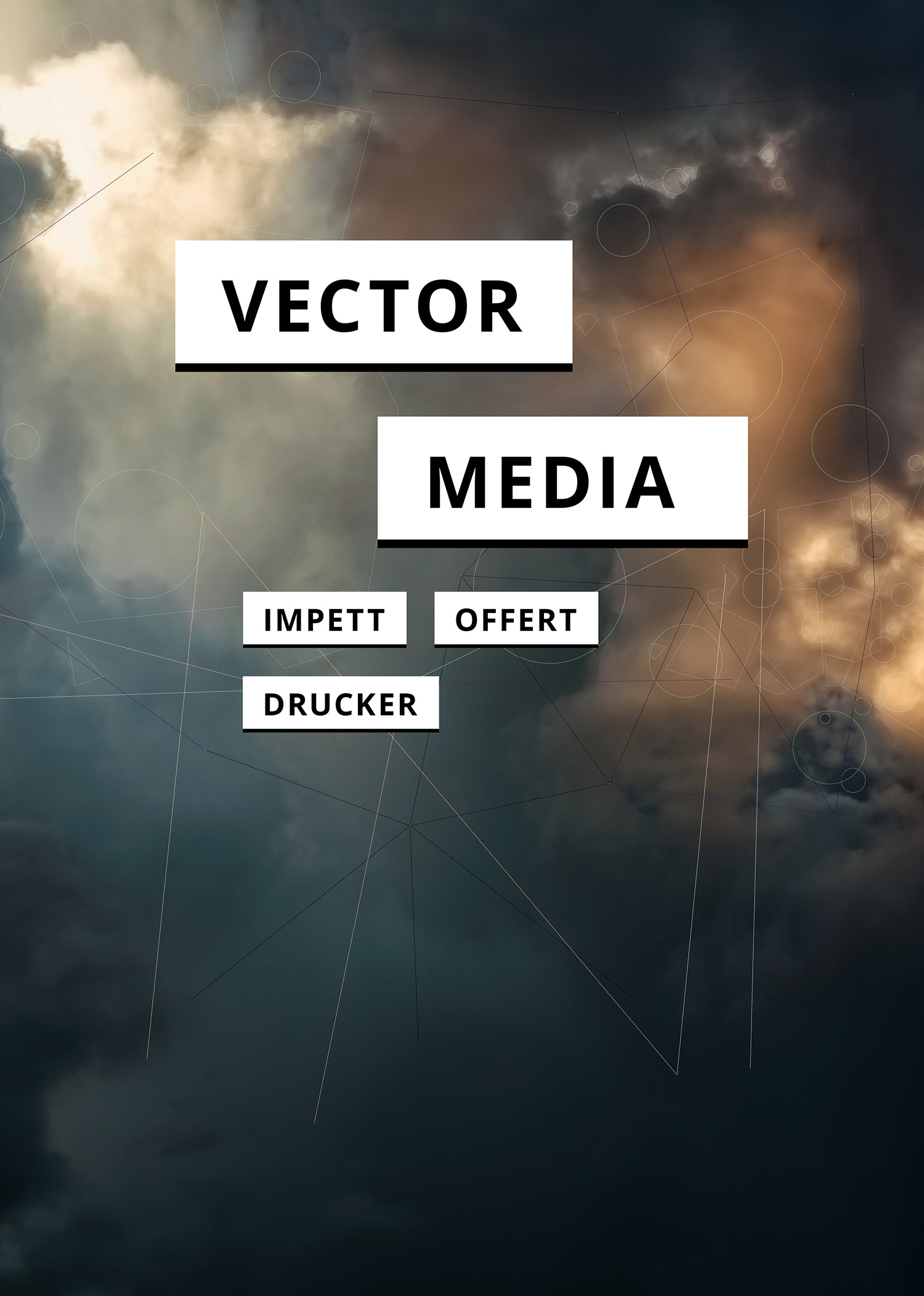
Vector Media
Author: Leonardo Impett
Author: Fabian Offert
Introduction by: Johanna Drucker
Lüneburg: meson press, 2026
Neural networks are designed to dissolve all media into the vector space—a universal space of commensurability. In Vector Media, Leonardo Impett and Fabian Offert parse theories of automatic vision to trace contemporary artificial intelligence’s technical ideology of epistemic reduction, where sensory data is turned into abstracted forms of meaning. Under this regime, bias is not just a question of what is represented but of the logic of representation itself. Drawing on Phil Agre’s notion of a critical technical practice, Vector Media reveals how artificial intelligence systems embed new epistemologies of media beneath the surface of their architectures.Analyzing the techniques underpinning large multimodal artificial intelligence models like DALL-E, Midjourney, Flux, or Stable Diffusion, Impett and Offert offer the concept of neural exchange value: the value cultural artifacts acquire not through meaning or context but through their capacity to function as vectors. In such a system, commensurability becomes a condition of existence: what matters is not what something is but that it can be embedded. Rather than focusing solely on datasets, Vector Media proposes a critical study of vector spaces—and the machine cultures they produce—as a necessary complement to prevailing approaches in AI critique.
Artificial Intelligence in Higher Education: A Phenomenological View

Editor: Sencer Yeralan
Author: Philip Aka
Author: Derek Baker
Author: Azra Branković
Author: Eka Gegeshidze
Author: Laura Ancona Lee
Author: Christos Michalakelis
Author: Mbulaheni Nthangeni
Author: Efthymia Staiou
Cambridge, UK: Open Book Publishers, 2026
https://doi.org/10.11647/OBP.0525
Artificial intelligence is increasingly embedded in the everyday practices of higher education, shaping assessment, governance, labor, and institutional legitimacy. Rather than presenting a technical guide or policy checklist, this volume instead offers a reflective, multi-voiced examination of what AI means for higher education’s purpose, identity, and future. Its phenomenological grounding shifts the focus from operational questions of implementation to deeper inquiries into how AI reshapes institutions, knowledge, and the academic self.
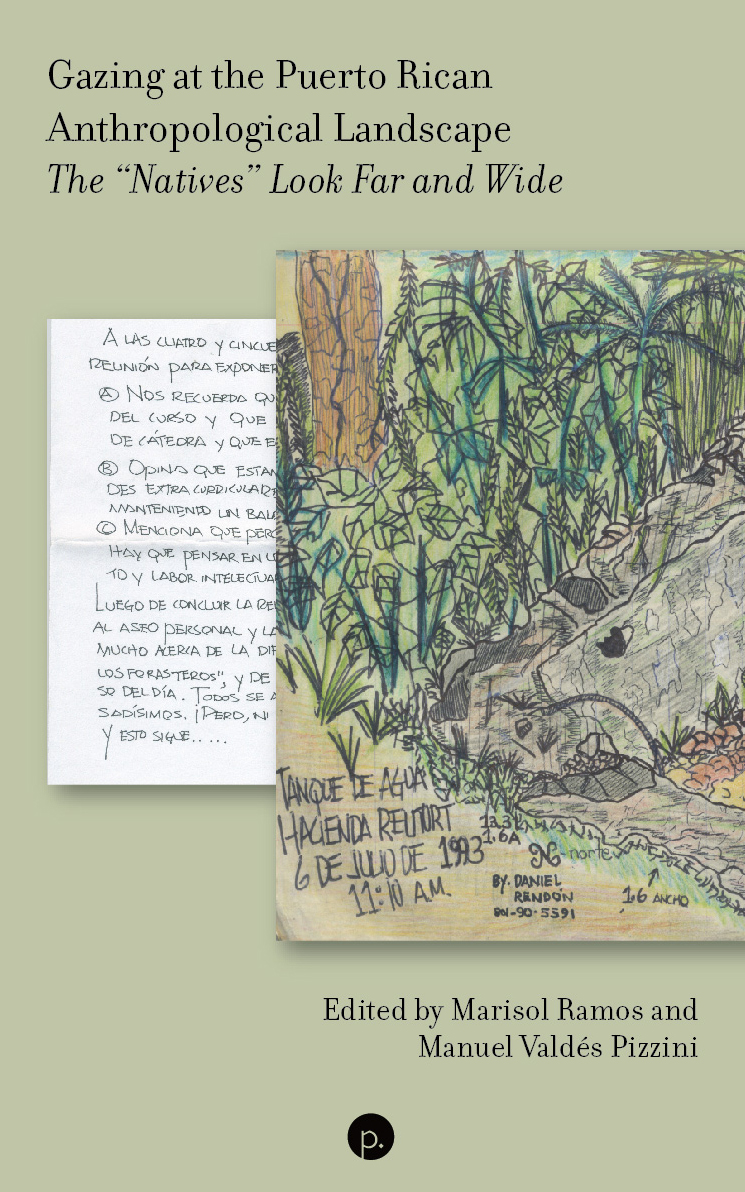
Gazing at the Puerto Rican Anthropological Landscape: The “Natives” Look Far and Wide
Editor: Marisol Ramos
Editor: Manuel Valdés Pizzini
Earth, Milky Way: punctum books, 2026
https://doi.org/10.53288/0540.1.00
Before World War II, most anthropological research in Puerto Rico was led by US anthropologists. The most famous project, The People of Puerto Rico, was directed by American anthropologist Julian Steward and launched the career of renowned scholars such as Sidney Mintz and Eric Wolf. Gazing at the Puerto Rican Anthropological Landscape aims to delineate the development of the post-WWII anthropological field in Puerto Rico by Puerto Rican anthropologists, the so-called “native” anthropologists. The contributors to Gazing at the Puerto Rican Anthropological Landscape deploy the term “native” somewhat ironically, but they also know that who they are affects their positionality vis-à-vis their research subjects. Thus, they retain the term to spark a conversation addressing the complicated feelings that such labels still evoke among non-mainstream anthropologists.
Gazing at the Puerto Rican Anthropological Landscape purposely avoids making Puerto Rico and Puerto Ricans a problem to study and instead focuses on a wide variety of epistemological and methodological questions related to the study of Puerto Rico and Puerto Ricans by “native” anthropologists within local, regional, and global spheres. We posit that the Puerto Rican anthropological landscape transcends the confines of the island of Puerto Rico to encompass its connection and engagement with the larger world, and that it is not limited to the inhabitants of the island of Puerto Rico but embraces members of its diaspora, as well as other groups and ethnicities. On that note, this book seeks to reflect critically on how the academic field of anthropology (research and teaching) in Puerto Rico has evolved, post-WWII, in various engagements with the current debates of contemporary anthropology — theoretical, methodological, socio-cultural, political, and otherwise.
Harvesting the Sea in Southeastern Arabia: Volume 2: Comparative Lexicon of Fish and Other Marine Species

Author: Miranda J. Morris
Author: Erik Anonby
Author: Janet C.E. Watson
Editor: Erik Anonby
Cambridge, UK: Open Book Publishers, 2026
https://doi.org/10.11647/OBP.0538
Along the shores of southeastern Arabia, traditional marine knowledge is fading as languages and ecosystems come under increasing pressure. This second volume of Harvesting the Sea in Southeastern Arabia brings together marine species terminology and associated knowledge in the five coastal Modern South Arabian languages (MSAL) and the Kumzari language of the Musandam Peninsula in eastern Arabia. The materials, collected by the authors in periods between the 1970s and the present, are a testament to communities’ longstanding intimacy with the sea and their resilient livelihoods in the face of often difficult conditions.
Over 2000 marine species names are inventoried, featuring many bony fish and cartilaginous fish, but also including mammals, reptiles, invertebrates, and plants. Terms for fish at various life stages and vocabulary associated with marine species are also provided. The lists are organised in the format of a comparative lexicon, where individual species are compared across the six languages, and as an annotated alphabetical lexicon with a searchable companion file, presenting additional insights collected over the course of fieldwork.
Along with its relevance for communities where this knowledge is being lost as species die out and livelihoods change, this book is an essential resource for anyone interested in learning from the languages, cultures, and ecosystems of Arabia.
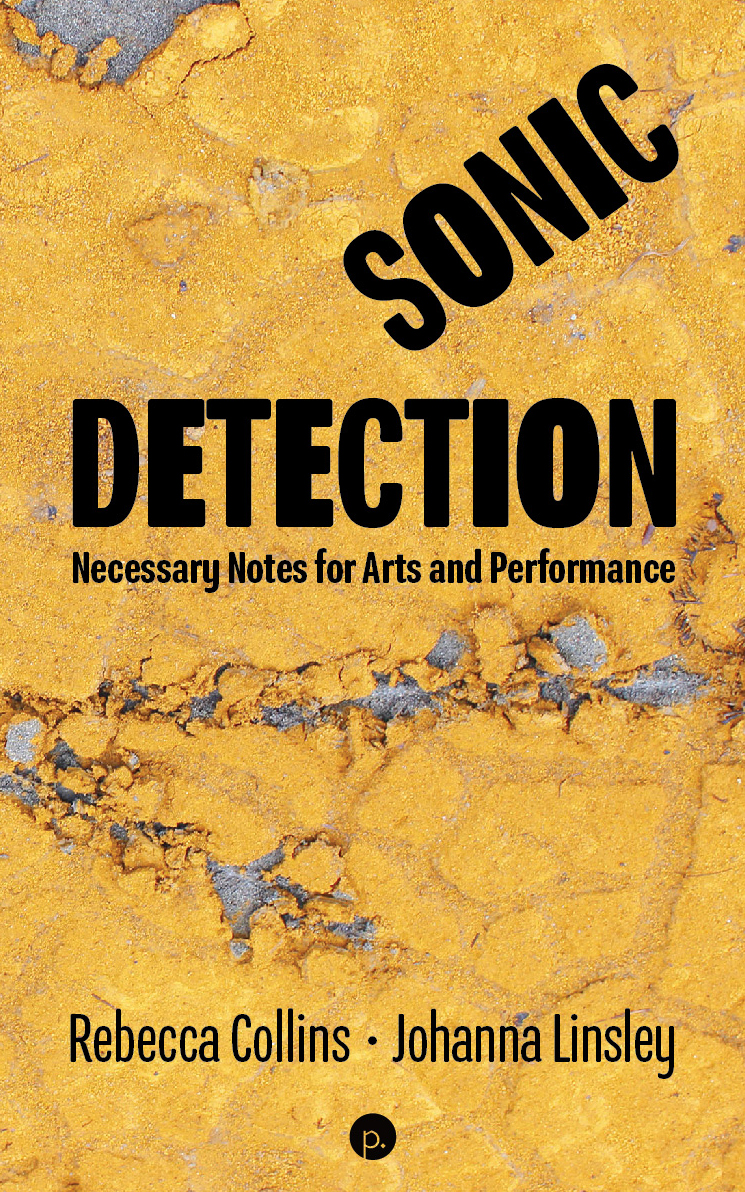
Sonic Detection: Necessary Notes for Art and Performance
Author: Rebecca Collins
Author: Johanna Linsley
Contributions by: Naomi Pearce
Contributions by: Xavier de Sousa
Contributions by: Christina Beatty
Contributions by: Nii Obodai
Research by: Amaara Raheem
Earth, Milky Way: punctum books, 2026
https://doi.org/10.53288/0470.1.00
Sonic Detection is part sonic noir, part performance document, and part critical investigation of listening at the margins for readers interested in prospecting the boundaries of performance studies, sound studies, and interdisciplinary writing.
The book opens with a group of sonic detectives (exact number unknown) who investigate the mystery of an as-yet-unidentified event that leaves traces only in the acoustic atmosphere. This hybrid fiction propels the reader up and down the UK coast and offers overheard fragments from a faded seaside resort, a container shipping port, a former coal-mining town, and the Scottish headquarters for North Sea oil. A heterogeneous collection of texts follows, from creative-critical essays, performance scores, engagement with the archives of earlier sonic detectives (including poet/performance artist Fiona Templeton and the sound art collective Bow Gamelan Ensemble), to a series of dispatches from expert witnesses with their ears to the ground.
Sonic Detection is not so much a monograph as a polygraph, tongue-in-cheek associations with questionable forensic technologies firmly in place. The book emerges from a decade-long collaboration between artists Rebecca Collins and Johanna Linsley, who used eavesdropping as an expanded creative methodology. The project began as a series of hyper-local, community-based performance works in coastal locations in the UK (from Bournemouth to Aberdeen) and grew into an international, multi-disciplinary life work devoted to an ongoing, organized curiosity. Sonic detectives hold open a collective sonorous space. They are the embodiment of the phenomenophile, lingering longer in listening.
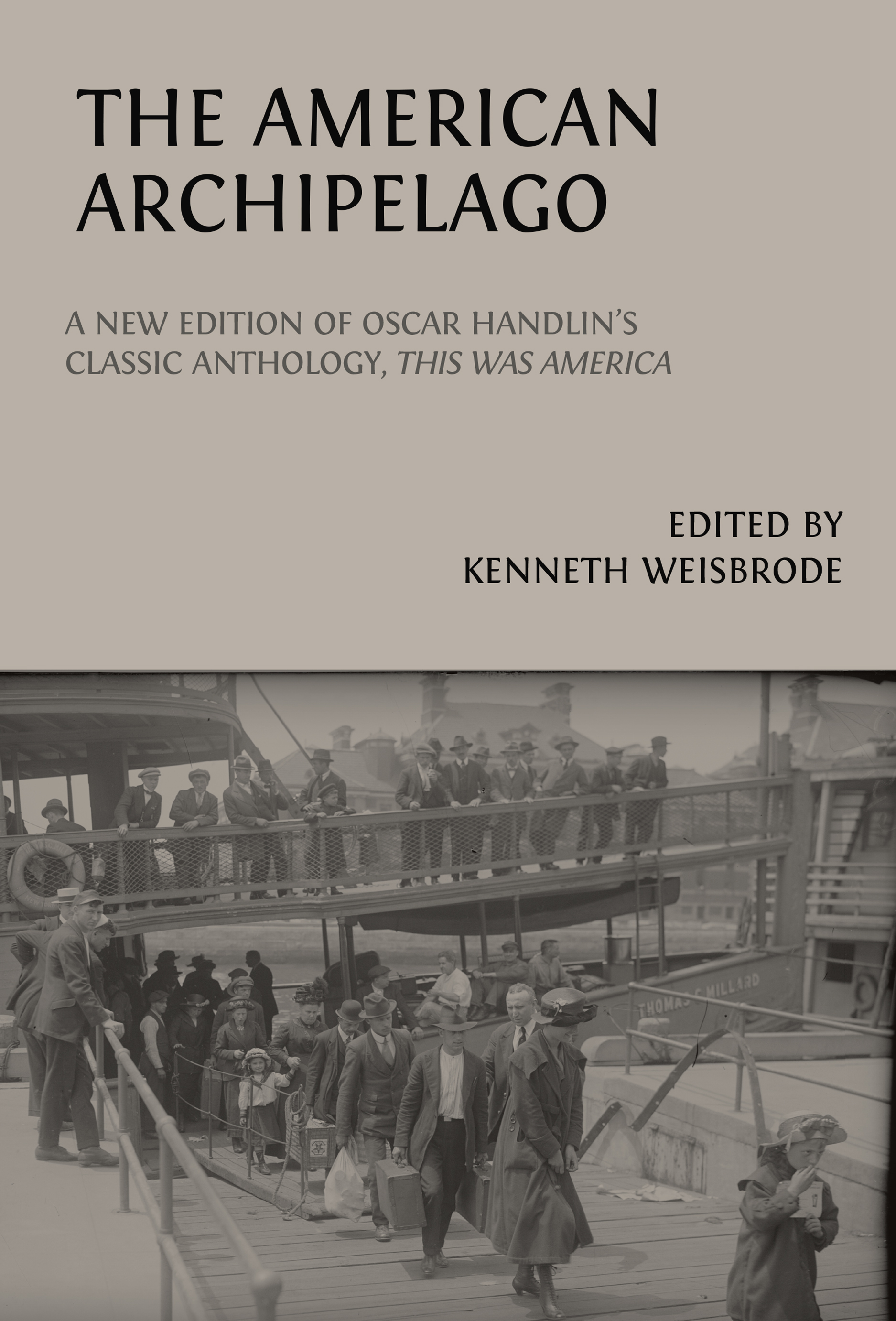
The American Archipelago: A New Edition of Oscar Handlin’s Classic Anthology, ‘This Was America’
Author: Oscar Handlin
Editor: Kenneth Weisbrode
Cambridge, UK: Open Book Publishers, 2026
https://doi.org/10.11647/OBP.0495
The collection at hand, Handlin’s classic anthology ‘This Was America’, first published in 1949, gathers Europeans’ travel accounts and perspectives on America from the eighteenth to the twentieth century. Rather than presenting a single narrative, Handlin emphasizes variety: contrasting impressions of liberty and inequality, restlessness and rootedness, optimism and critique by people arriving from diverse European backgrounds. His free translations and selective introductions guide readers subtly but leave interpretation open. Over time, these essays shift meaning depending on context—once read as a celebration of American life, they now invite more critical reflection. This new edition reimagines America not as a singular whole but as an “archipelago”: a collection of diverse experiences, perceptions, and contradictions. The metaphor underscores the interplay between unity and multiplicity in American identity.
Pietro Giannone. Autobiography. The Tragedy of a Historian and the Inquisition: Translated with commentary by Thérèse Ridley

Translator: Thérèse Ridley
Contributions by: Thérèse Ridley
Cambridge, UK: Open Book Publishers, 2026
https://doi.org/10.11647/OBP.0483
This edition, translated and annotated by Therese Ridley, not only renders the full autobiography accessible to English readers for the first time, but contextualizes it within modern Italian scholarship. Each chapter is enriched with appendices that include critical sources, commentary, and related correspondence, illuminating the people, events, and philosophical struggles that defined Giannone’s world.
Beyond Popular Science

Author: David H. Silver
Cambridge, UK: Open Book Publishers, 2026
https://doi.org/10.11647/OBP.0526
Beyond Popular Science is not a popular science book. It is not a textbook. It is not an academic monograph. Instead, it occupies a rare and deliberately unconventional space: a work for readers who enjoy scientific storytelling but are no longer satisfied with simplifications that smooth away the real substance of modern science.
Kayfabe Nation: Professional Wrestling, Donald Trump, and the New Cynicism
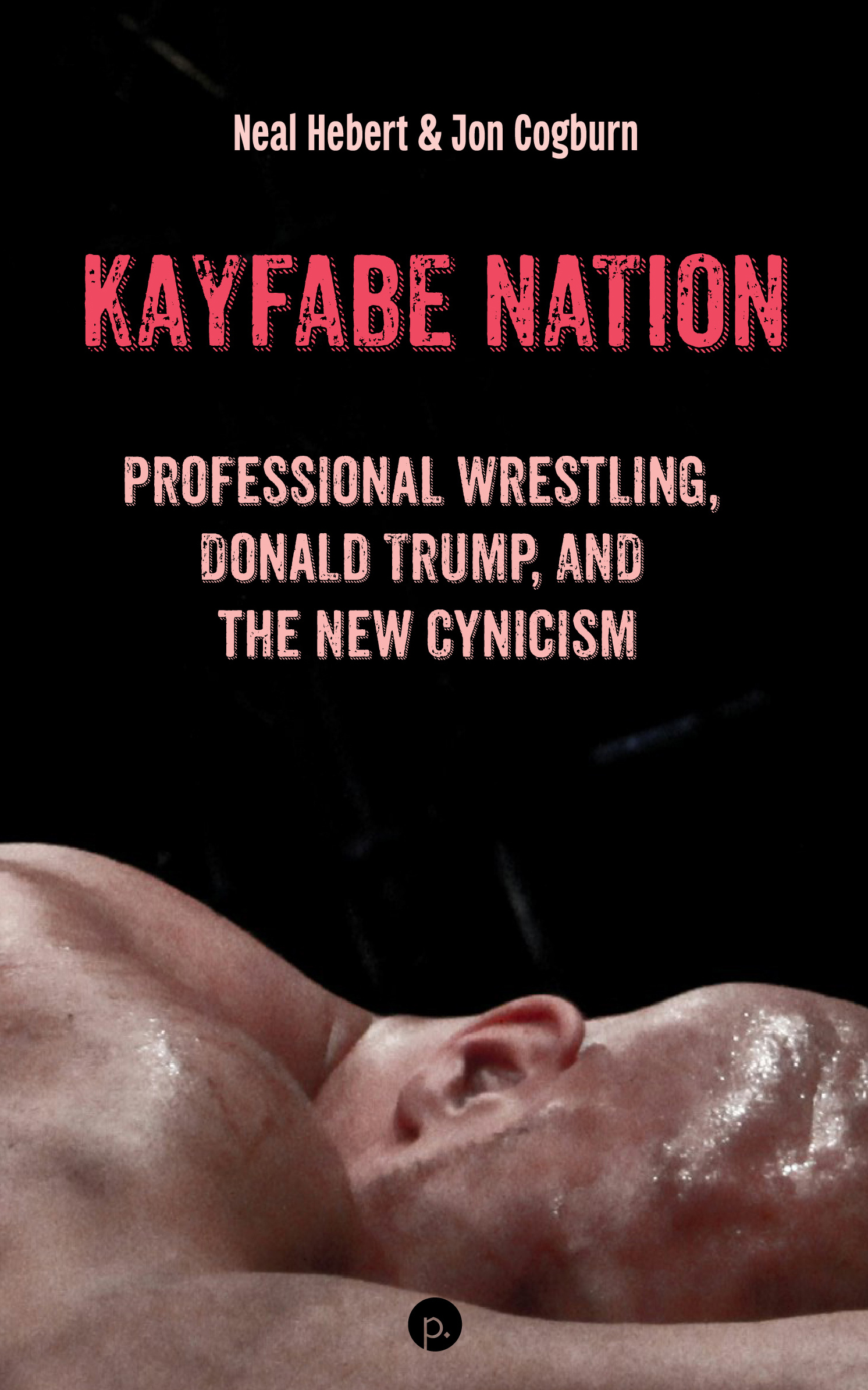
Author: Neal Hebert
Author: Jon Cogburn
Earth, Milky Way: punctum books, 2026
https://doi.org/10.53288/0563.1.00
What do a pudgy, orange autocrat, and pumped-up men in tights have in common? The connections, while profound, all rest on specific strategies employed by World Wrestling Entertainment during the early 2000s (known as WWE’s “Attitude Era”) when Donald Trump was centrally involved with the promotion of WWE. These are: (1) universally breaking kayfabe, the code of people in the industry not to reveal or admit fakery; (2) Vince McMahon (WWE’s CEO at that time) playing a fictional version of himself as someone constantly humiliated in storylines; (3) the vicious affirmation of traditional gender roles through parables of male domination; and (4) telling stories that encourage viewers to ignore the actual material conditions of WWE “superstars” in favor of conspiratorial fictions involving powerful individual actors. In Kayfabe Nation: Professional Wrestling, Donald Trump, and the New Cynicism, Hebert and Cogburn present a trenchant analysis of Attitude Era WWE, showing the extent to which MAGA is just is a function, or symptom, of Trump’s internalization of WWE’s most objectionable tropes.
Neal Hebert and Jon Cogburn’s goal is not to use WWE merely to understand Trumpism and the related autocratic turn in countries as diverse as El-Sisi’s Egypt, Putin’s Russia, Erdogan’s Turkey, Modi’s India, Bolsonaro’s Brazil, Orbán’s Hungary, Netanyahu’s Israel, and of course Trump’s own America. Beyond that, Kayfabe Nation is a defense of truth against the lie that culminates in the widespread adoption of self-defeating conspiracy theories among the constituency of the right, as well as against the idea, popular in corrupted center-left parties across the planet that political success comes down to adopting better rhetorical strategies, strategies that exist in part to cover over their abandonment of New Deal and socialist ideologies where the material conditions of their constituencies would actually improve.
March 2026
Works for Works, Book 2: “No Rights”
<img src=“https://books.punctumbooks.com/10.53288/0512.1.00_frontcover.jpg” alt=“cover for Works for Works, Book 2:”No Rights”” width=“300”/>
Author: Gavin Keeney
Earth, Milky Way: punctum books, 2026
https://doi.org/10.53288/0512.1.00
Works for Works, Book 2: “No Rights,” privileges works-based agency (praxis) in literary-artistic scholarship. The principal focus of the Franciscan-inspired embrace of a “no rights” status for works of literary-artistic scholarship is toward freeing both author and works from forms of technocratic determinism and neo-utilitarianism associated with regimes of intellectual property rights law and platform cultures. Engaging, and then dispensing with, the concept of “the artistic exception,” a holdover from modernist justifications for art in/for itself, Works for Works nonetheless restores the primacy of the work itself through disconnecting author and work toward a transfiguration of both author and work and the substantiation of a new ecosystem for radical works of artistic-critical inquiry.
Works for Works, Book 2: “No Rights,” follows upon Works for Works, Book 1: Useless Beauty (2022), a structuralist-inspired survey and exposé of the immanentist paradox artist-scholars inhabit in the post-contemporary transition from modernist and post-modernist reflexivity to forms of cultural production that favor no singular raison d’être nor socio-cultural, socio-economic, or socio-political bias.
Red Lives: Our Years in the U.S. Communist Party (1950–2000), Vol. 1: Coming of Age in the Communist and Labor Movements
Editor: Jay Schaffner
Editor: Paul Friedman
Editor: Cindy Hawes
Editor: Geoffrey Jacques
Editor: Timothy Johnson
Editor: Carol Pittman
Editor: Donna Ristorucci
Editor: Daniel Rosenberg
Editor: Jackie Saindon
Foreword by: Robin D.G. Kelley
Earth, Milky Way: punctum books, 2026
https://doi.org/10.53288/0455.1.00
Red Lives: Our Years in the US Communist Party (1950–2000) is the first collection of historical analyses and reminiscences by members of the Communist Party USA (CPUSA) and the Communist youth movement in the US from the 1950s through the 1990s. The nearly fifty first-person testimonies bring to life a missing chapter in the history of US radicalism and demonstrate the influence of the post–World War II generation of Communists on social justice movements.
Most histories of US Communism end in 1956 when Red Lives just begins, when McCarthyism was on its final legs, the Civil Rights Movement was sweeping the American South and the whole country, the student movement was taking its first breaths, and a new generation of young people were seeking out socialists, communists, and the Communist Party in order to craft a radical, anti-establishment politics. At a time when the launching of Sputnik, the Cuban Revolution, other revolutions sweeping Africa, and the example of the Vietnamese people fighting for their freedom and independence were inspiring the world, one-third of the world was also socialist, led by the Soviet Union and China. The time was propitious for a new generation in the US to also be seeking out, and joining, the CPUSA. This first volume of Red Lives, Coming of Age in the Communist and Labor Movements, brings the stories of that generation to the forefront of American history at a time when narratives of resistance are more needed than ever before.
Spaces for Action: A Repository of Tools and Methods for a Socially Situated Architectural Education

Editor: Guido Cimadomo
Editor: Ingrid C. Vargas Díaz
Cambridge, UK: Open Book Publishers, 2026
https://doi.org/10.11647/OBP.0503
‘Spaces for Action’ provides a hands-on guide for teachers and students looking to make architectural learning more engaging, collaborative, and socially meaningful.
The book brings together over 80 creative tools that can be adapted to different classrooms, communities, and design challenges. The tools are grouped by teaching approaches—like cooperative teamwork, experiential learning, and transformative practices—and by the stages of the design process: identifying challenges, generating ideas, and putting them into action. Each entry gives a clear overview of what the tool is for, how it works, and what you need to make it happen. You’ll also find tips on group sizes, resources, and possible collaborators, making it easy to bring these methods straight into practice.
Ottoman-Era Documents from the Cairo Genizah

Author: Jane Hathaway
Cambridge, UK: Open Book Publishers, 2026
https://doi.org/10.11647/OBP.0502
This groundbreaking volume marks a rare and transformative contribution to studies of the Cairo Genizah, a vast trove of documents generated by Egypt’s Jewish community between the 10th and 19th centuries. While the Cairo Genizah has long yielded extraordinary insights into Jewish history in the greater Mediterranean region, attention has focused overwhelmingly on documents from the ‘classical’ period (11th–13th centuries). Documents from the later period, when Egypt was ruled by the Mamluk Sultanate and the Ottoman Empire, remain woefully underexplored. This book helps to change that, presenting a meticulously curated collection of later Genizah documents that expand the boundaries of current scholarship.
Make/Unmake: Play at the Centre of Culture Change
Author: Anna Beresin
Cambridge, UK: Open Book Publishers, 2026
https://doi.org/10.11647/OBP.0511
Anna Beresin’s ‘Make/Unmake’ is an engaging and deeply original exploration of children’s play as a powerful cultural force. Drawing on ethnographic research and vivid travel writing, the author journeys to the Midlands region of England to observe three remarkable play-based programs: the Maker{Futures} Mobile Makerspace, the Pitsmoor Adventure Playground, and the GLUE Collective. She captures the voices of playworkers, teachers, and artists and documents the ingenuity of children turning objects into tools of imagination and change.
Dutch Afro Becomings: Hybrid Being in Black Art and Culture
Author: Charl Landvreugd
Earth, Milky Way: punctum books, 2026
https://doi.org/10.53288/0537.1.00
In Dutch Afro Becomings, artist, curator, and researcher Charl Landvreugd argues that we do not yet have a language to understand Dutch Afro-ness, and that it is insufficient to rely on the discourses developed in African American, Black British, or Caribbean cultural theory alone. This critical monograph on continental European Black art and cultural history articulates the specificity of Dutch Afro-ness and the way that Blackness has been translated and (mis)understood across multiple decades of cultural policy, while also providing an incisive analysis of the Dutch state’s aim to showcase “diversity” in a way that is comfortable to the white cultural class, without ever addressing issues of racism or race.
Simultaneously, Landvreugd traces how recent generations of artists are effectively constructing a new visual language to name their Dutch Afro-ness by deepening the way their being is shaped across multiple cultural identities and national histories. These time travelers and wanderers are the Wakaman: cultural workers that embrace their hybridity and multiplicity and have defined, on their own terms and through their own words, their nativity within the Dutch art scene.
Dutch Afro Becomings is a key theoretical and art-historical work, as an introduction to both different international genealogies of Black arts and culture and to the different movements that shaped the specificity of Dutch Afro artists in particular.
Historicizing IQ Testing: Intelligence Assessments and their Role in Norwegian Society from the 1900s to the Present
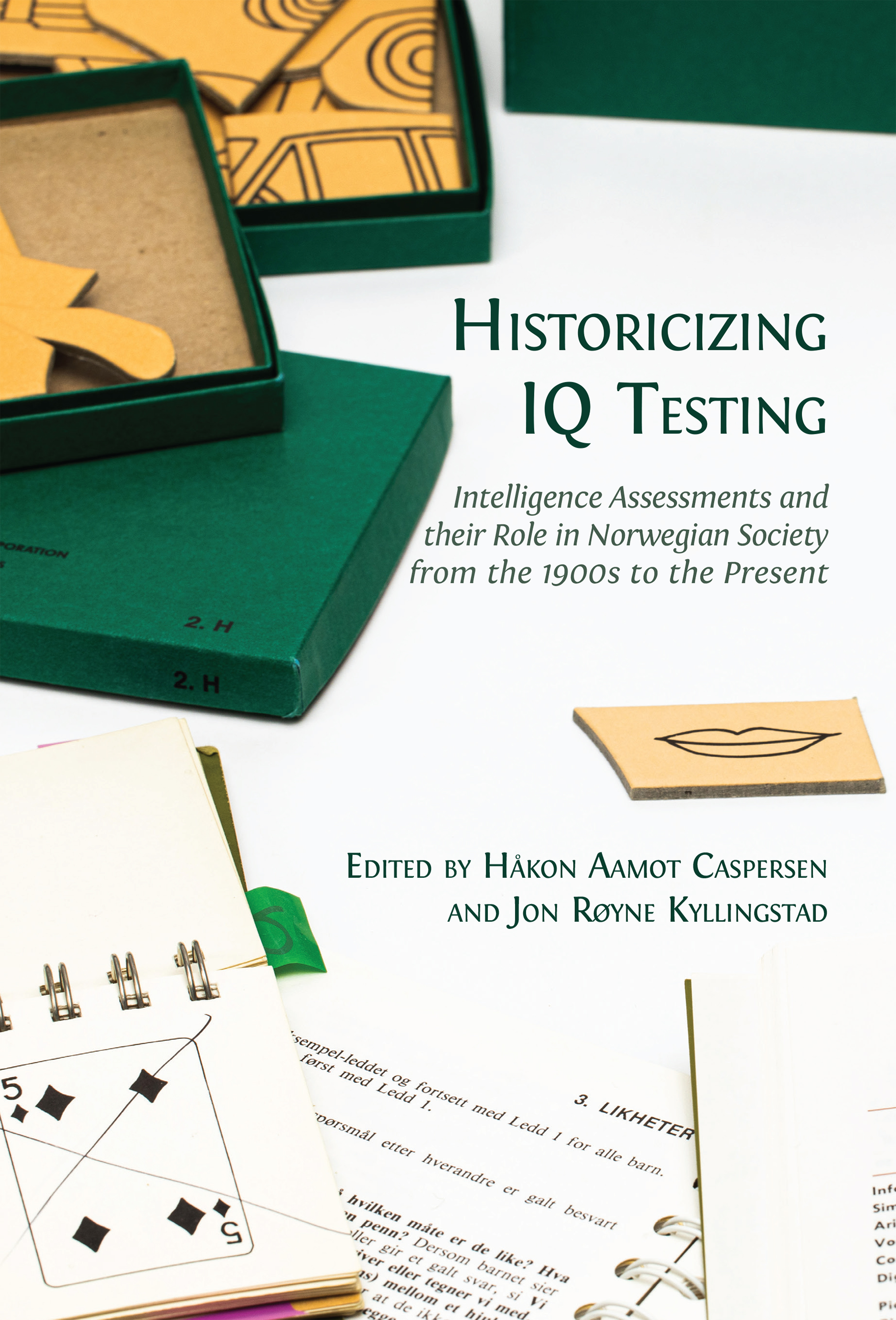
Editor: Håkon Aamot Caspersen
Editor: Jon Røyne Kyllingstad
Cambridge, UK: Open Book Publishers, 2026
https://doi.org/10.11647/OBP.0471
Intelligence testing has shaped modern society in profound ways, influencing education, psychology, law, and governance. This volume offers the first comprehensive study of the history of IQ testing in a Nordic country, shedding new light on its development, adaptation, and societal impact in Norway.
February 2026
Desire: Subject, Sexuation, and Love
Author: Ana María Munar
Earth, Milky Way: punctum books, 2026
https://doi.org/10.53288/0516.1.00
Have you ever wondered what makes you wake up in the morning? Why not just lay down, stay, and eventually disappear? What is the wanting, the energy, and the grace of liveliness? Desire is at the core of liveliness, and this book explains why it is so. Desire is much more than a mere appendix to love, sex, or our craving to have the latest fashion item. It is what allows the most personal and unique expression of each of us.
Desire: Subject, Sexuation, and Love is a work of gratitude to the Lacanian tradition and feminist philosophy. It creatively uses the story of “The Little Mermaid” by H.C. Andersen, as well as art and popular culture to explain the complex landscape of desire and its relation to love and sexuation. Much of the criticism of psychoanalysis from gender studies and poststructuralism is based on a superficial reading of Jacques Lacan, and Munar corrects this, providing in the first half of the book a rigorous and clear analysis of Lacanian subjectification and sexuation, elucidating their relationship to the nature of desire and love, in order to modify overly simplistic and erroneous interpretations of his thinking on desire.
Desire is essayistic and poetic philosophy, drawing upon and playing with psychoanalysis, philosophy, literature, biography, poetry, and art. As the reader enters the second part of the book, the focus on Lacanian theory recedes, opening a space that is more paradoxical and multiple where Munar engages in creative form as an expression of critique, transforming our understandings of desire and love, which always elude us while also always being present.
Imagining What We Don’t Know: Creative Theory and Critical Bodies
Author: Lisa Samuels
Earth, Milky Way: punctum books, 2026
https://doi.org/10.53288/0483.1.00
Bringing together perception, ecology, community, lingual value, and quantum life, Imagining What We Don’t Know: Creative Theory and Critical Bodies presents twenty-four essays and theory poems that blend interpretive neologisms — wild dialectics, distributed centrality, membranism, deformance, bioautography, transplace, soft text, and more — with readings of visionary philosophers and the art and writing of Algeria, Australasia, the Caribbean, Oceania, the UK, and the US.
Committed to experimental ideation and relational ethics, Imagining What We Don’t Know is for art and theory practitioners, philosophy rebels, creative writers, and anyone who relishes thinking about contemporary art, transnational and transdisciplinary life, and how we imagine with language. Imagining What We Don’t Know presents a biblio-architecture of “blurprints” built with theories of the embodied mind that are elemental, entangled, and electrified by the political. This is creative theory, hovering with alterities of art and interpretation and imagining with critical attention.
Africa in Russian Imperial Culture: Race, Empire, and Representation (1850-1917)
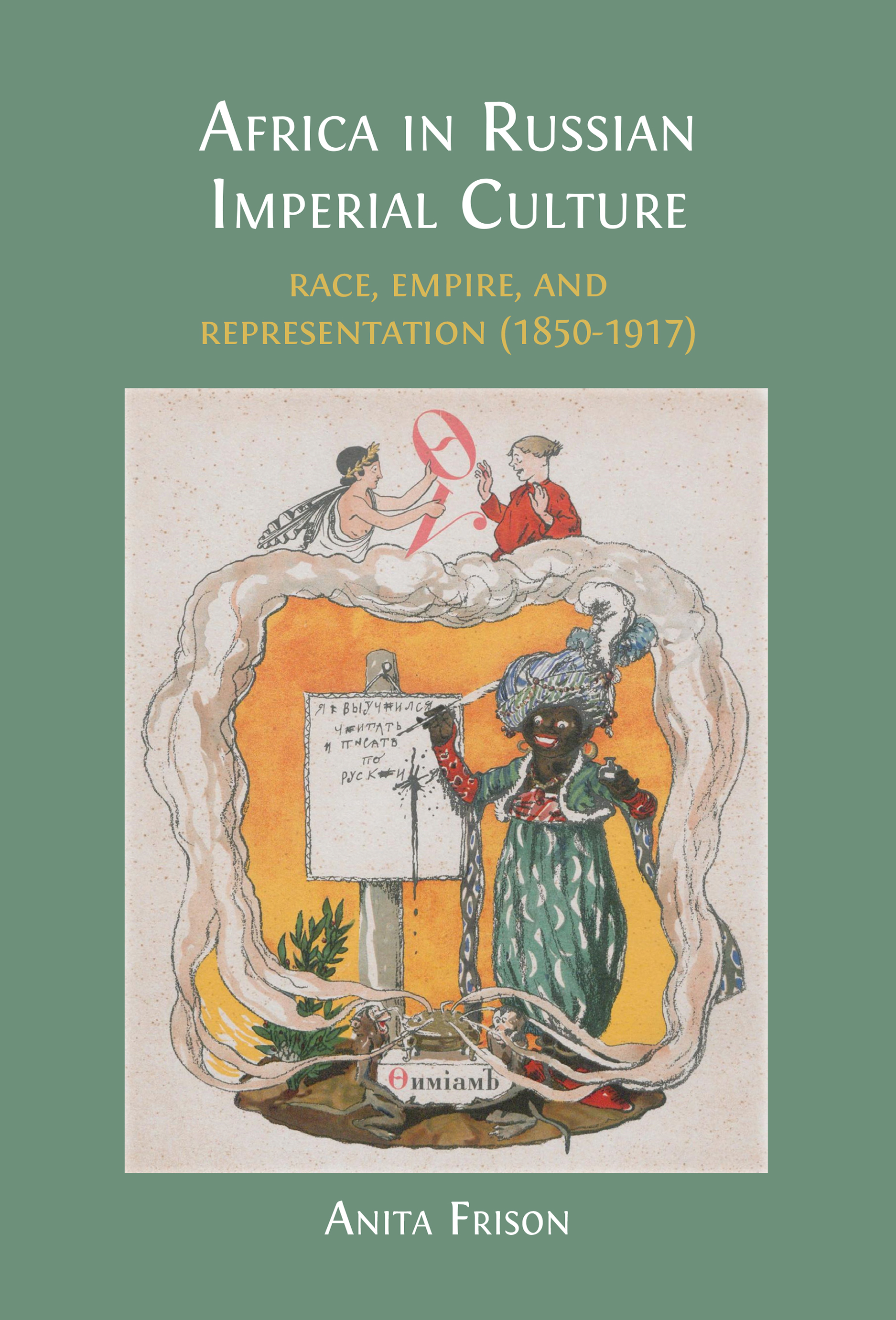
Author: Anita Frison
Cambridge, UK: Open Book Publishers, 2026
https://doi.org/10.11647/OBP.0504
This volume uncovers how Sub-Saharan Africa was imagined in Russian culture from 1850 to 1917. Drawing on travelogues, ethnographic studies, fiction, and museum collections, Anita Frison reveals how Russia—though lacking formal colonies in Africa—nonetheless engaged deeply with Western colonial discourse.
From Erving to Goffman: A Work in Performance?
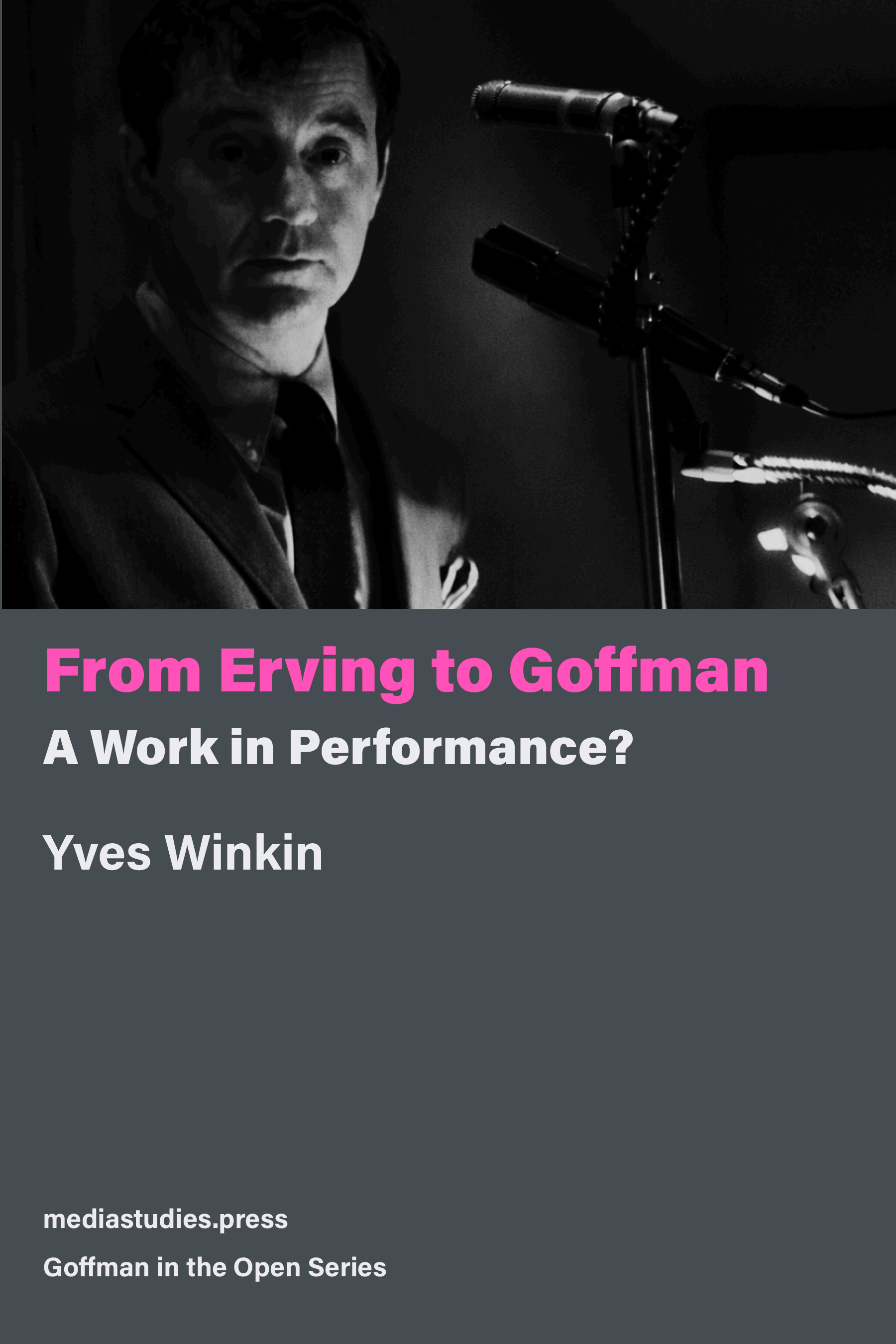
Author: Yves Winkin
Bethlehem, PA: mediastudies.press, 2026
https://doi.org/10.64629/3f8575cb.e3d5966c
Yves Winkin’s From Erving to Goffman, translated from the French, is an elegantly written and deeply informed account of the sociologist’s life, by one of the world’s leading Goffman scholars.
A Society of Meta-Organizations
Author: Héloïse Berkowitz
Cambridge, UK: Open Book Publishers, 2026
https://doi.org/10.11647/OBP.0505
Our contemporary societies are made of meta-organizations — organizations composed of other organizations. These range from international bodies like the International Whaling Commission, to national industry or business associations like the crowdfunding association Finance Participative France, to local associations such as fisheries co-management committees in Catalunya. Meta-organizations have become a defining feature of how actors coordinate, govern and make collective decisions. But what exactly makes them distinct, and why do they matter — both in theory and in practice?
Neomania: How Our Obsession With Innovation is Failing Science, and How to Restore Trust
Author: Krist Vaesen
Cambridge, UK: Open Book Publishers, 2026
https://doi.org/10.11647/OBP.0507
Drawing on metascience as well as the philosophy and sociology of science, Neomania offers a critical analysis of how this ethos has permeated the norms and institutions of modern science. The book traces its historical emergence, diagnoses its systemic consequences, and articulates a reform agenda centered on coordination, shared research programs, and epistemic integrity—an agenda that goes well beyond the principles of Open Science.
al-Dānī’s al-Taysīr fī al-qirāʾāt al-sabʿ: A Translation with Linguistic Commentary
Author: Marijn van Putten
Cambridge, UK: Open Book Publishers, 2026
https://doi.org/10.11647/OBP.0475
Al-Taysīr fī al-Qirāʾāt al-Sabʿ by the 11th century Andalusian scholar ʾAbū ʿAmr al-Dānī is one of the most influential descriptions of the seven reading traditions of the Qurʾān. It is the work on which the later didactic poem by al-Šāṭibī was based, which still stands as the basis for the teaching of the reading traditions among Muslim specialists. This book makes the highly technical genre of the Qurʾānic reading traditions accessible through a rigorous translation of al-Dānī’s work with extensive elucidating footnotes. Besides a full translation of the text, the book also includes an in-depth introduction, which lays out the history of the reading traditions, details of their transmission, the technical terminology of the Qirāʾāt genre, and summarises the linguistic principles of the reading traditions using modern linguistic terminology and illustrative tables.
Corporeal Aesth/ethics: The Body in Bracha L. Ettinger’s Theory and Art
Author: Anna Kisiel
Earth, Milky Way: punctum books, 2026
https://doi.org/10.53288/0499.1.00
Can we think of an ethics that originates in corporeality, and not in codified or symbolic systems? In* Corporeal Aesth/ethics,* the body resurfaces as a central category of Bracha L. Ettinger’s theory and art, as well as an interpretive key that allows us to assume ethical responsibility for an Other who is not abstract, or distant, or total. Ettinger’s matrixial theory, a deeply feminist psycho-analytical system, ventures beyond the models of subjectivity based on separation and lack, and thus it helps us rethink togetherness and our own humanity.
Corporeal Aesth/ethics explores how we become subjects not through a series of cuts, but through an encounter with radical openness, modeled upon the intrauterine/pregnancy period. Even though the theorized encounter relies on caring, carrying, and sharing, it is far from pleasant and safe, as we might assume. Indeed, some of the knowledge communicated in this phase of subjectivity-becoming may turn out to be painful, even traumatic. It is this profoundly corporeal encounter, Kisiel contends, that makes it possible to conceive of the body as a site and source of ethics. Envisioned through the lens of the matrixial, a subject (never alone, always in severality) reaches new modes of intimacy and hospitality, occasioned by our universally shared, originary experience of becoming with-in the maternal body.
A psychoanalyst, theoretician, and feminist, Ettinger is also an artist. Sharing Ettinger’s conviction that “painting and theory are not different aspects that attest to the same thing, but are rather differentiated levels of working-through,” Kisiel maps the entanglements of the (feminine/motherly) body in both dimensions of Ettinger’s work. In five chapters, this book delineates the project of Ettinger’s corporeal aesth/ethics. It contextualizes the matrixial body, analyzes its humanizing potential, and proposes dialogues of Ettinger’s work with feminism, theology, and Holocaust studies.
Sticky Films

Editor: Kerim Dogruel
Editor: Fadekemi Olawoye
Editor: Clara Podlesnigg
Author: Olja Alvir
Author: Marie Sophie Beckmann
Author: Fabienne Bieri
Author: Miriam De Rosa
Author: Silas Edwards
Author: Rodrigo Faustini dos Santos
Author: Fenja Holz
Author: Philipp Dominik Keidl
Author: Franziska Kohler
Author: Andrea Mariani
Author: Jurij Meden
Author: Emma Merkling
Author: Nils Meyn
Author: Amber Jamilla Musser
Author: Jamal Phoenix
Author: Alexandra Schneider
Author: Laura Teixeira
Author: Julia Willms
Author: Sigal Yona
Stickiness is ambiguous. Sometimes it is a problem, sometimes a solution. It holds a strong affective charge between arousal, lust and disgust. If something is sticky, it promises relation while also threatening unwanted clinginess and the collapse of boundaries between self and other. This volume seeks out moments of stickiness in media cultures, thinking “film” beyond moving images as sediment, residue or layer that transforms, repairs, melts, and splices. Sticky Films explores stickiness in three parts: through sticky feelings, sticky modes of being and becoming, and the representations and material traces of stickiness in audiovisual media.
January 2026
Science in the Salon: Atoms and Animals in Madeleine de Scudéry’s ‘Conversations’ (1680–92): An Essay and Translation
Author: Helena Taylor
Cambridge, UK: Open Book Publishers, 2026
https://doi.org/10.11647/OBP.0465
Madeleine de Scudéry (1607–1701) was a celebrated seventeenth-century novelist and essayist, yet her engagement with natural philosophy and the sciences has been largely overlooked. This volume presents the first English translation of ‘The Story of Two Chameleons’ (1688) and situates it within Scudéry’s broader scientific and philosophical writing. Beyond this seminal text, the book explores her reflections on atomism, natural history, and epistemology, revealing her critical engagement with cutting-edge theories of her time, including a challenge to the Cartesian ‘animal-machine’ hypothesis.
Urban Liquefaction: Rethinking the Relationship between Land and Sea
Editor: Cristián Simonetti
Editor: Michel Lussault
Editor: Tim Ingold
Earth, Milky Way: punctum books, 2026
https://doi.org/10.53288/0532.1.00
From classical times until today, cities have been conceived in the western imagination as ideally confined to the fixities of the land, a space defined in opposition to the fluxes of the sea. Whereas solid land afforded a durable platform for the establishment of property and citizenship, the fluid sea allowed markets—isolated within the secure boundaries of cities—to be connected across the globe though navigation.
Urban Liquefaction: Rethinking the Relationship between Land and Sea attends to the concurrent tensions between solidity and fluidity, permanence and impermanence, and substance and change that remain at the core of the western intellectual tradition, often dividing what is perceived as social from what is perceived as natural in life. Sea level rise poses unprecedented threats to this oppositional relationship, forcing us to reconsider the tension between solidity and fluidity in the design of the built environment. Nearly ten percent of all major cities are likely to be impacted by sea level rise in the coming decades, compromising the necessary infrastructure on which urban life depends. In reality, urban landscapes have been continually in flux, which becomes dramatically visible to urban dwellers mostly in catastrophic events such as earthquakes, tsunamis, alluvions, sinkholes, and, above all, soil liquefaction.
Urban Liquefaction gathers contributions from scholars and practitioners working across continents and fields interested in urban life in (and after) the Anthropocene, including anthropology, archaeology, art, architecture, design, human geography, and science studies, to open up an inquiry into these categorical tensions and to speculate on alternative futures for the built environment.
The Case of California

Author: Laurence A. Rickels
Earth, Milky Way: punctum books, 2026
https://doi.org/10.53288/0577.1.00
Focusing on the changing image of the West Coast through such varied social and cultural artifacts as bodybuilding, group therapy, suicide cults, Marilyn Monroe, milk-carton images of missing children, orgies, Mickey Mouse, zombies, teenage slang, shock therapy, and surf music, The Case of California offers a dizzying psycho-history of the twentieth century as crystallized in the symbolic configuration and “case” of California, which case is articulated in relation to German modernism, National Socialism, and Freudian psychoanalysis. As Laurence Rickels writes, “on the personalizable level or label, California is a death cult; on the social, outward, happy-face level, it distributes pleasure via sadomasochism, the adolescent group, or friendship.”
Ultimately, The Case of California excavates the places “California” occupies as concept or placeholder within Freudian psychoanalysis and such systems as the Frankfurt School, East Coast psychoanalysis, and deconstruction. To excavate the full range of “California,” one must apply pressure to a series of adjacent (and often equally marginal or missing) concepts, including group and adolescent psychology, female sexuality, the haunting of music and of mass media at large, the charge of child abuse, and a certain convergence of religious and hysterical conversion.
This publication was originally published by University of Minnesota Press in 1991, and is now being released as a new print and open-access edition as part of punctum’s Special Collections initiative.
Passivisation in Semitic, Iranian, Armenian, and Beyond
Editor: Paul M. Noorlander
Editor: Hiwa Asadpour
Cambridge, UK: Open Book Publishers, 2026
https://doi.org/10.11647/OBP.0516
This volume brings together research on passive voice constructions in low-resource languages of Western Asia, a region marked by extraordinary linguistic diversity as well as a long history of cultural suppression and marginalisation. The contributions showcase the passive voice in Semitic, Iranian, Armenian, Greek, and Turkic languages, many of which are endangered, understudied, or confined to diaspora communities and disappearing language islands. Education and cultural expression in these languages remained heavily restricted across parts of Turkey, Syria, Iraq, and Iran, underscoring the urgent need for documentation and revitalisation.
Defund Culture: A Radical Proposal
Author: Gary Hall
Bethlehem, PA: mediastudies.press, 2026
https://doi.org/10.64629/3f8575cb.67ab11w2
Defund Culture interrogates the structural inequalities embedded in Britain’s cultural institutions, arguing that meaningful transformation requires not just expanding access, but redistributing resources away from elite structures toward more pluralistic, decolonial alternatives.
Heroines of Greek and Roman Myth: An Intermediate Latin Reader

Author: Maxwell Teitel Paule
Cambridge, UK: Open Book Publishers, 2026
https://doi.org/10.11647/OBP.0496
This volume offers students a fresh approach to reading Latin through the lens of women’s stories in classical myth. The stories, carefully adapted from ancient sources, progress in grammatical and stylistic difficulty, beginning with accessible prose and gradually building toward the complexity of authentic classical Latin. Drawing on Dickinson College’s Latin Core Vocabulary, the book ensures that learners are practicing the most useful words, while less common terms are glossed in-line to promote fluid reading rather than constant translation.
December 2025
Reckoning with Everything
Editor: Benedikt Merkle
Editor: Bernhard Siegert
Author: Geoffrey C. Bowker
Author: Ranjodh Singh Dhaliwal
Author: Anna Echterhölter
Author: Eva-Maria Gillich
Author: Moritz Hiller
Author: Jeffrey West Kirkwood
Author: Susanna Lidström
Author: Jussi Parikka
Author: Christoph Rosol
Author: John S. Seberger
Author: Angelika Seppi
Author: Christina Vagt
Author: Adam Wickberg
The transformation of the cultural technique of calculation into a computational environment for the whole planet Earth requires media studies to undergo fundamental changes that go beyond mere reflection on the transformation of global political and economic structures. The becoming environmental of computing confronts us with the fact that the map is the territory: map and territory, media and nature, the Symbolic and the Real, are not distinguished in any categorical way but rather temporarily stabilized results of recursive processes by which they differentiate themselves from each other and call each other into being.However, the cultural technique of calculation has not only become “environmental” since the ubiquity of computation turned cultural techniques into environing techniques. Computation must and has always had to “reckon with everything,” with the materialities of the media that define the environmental conditions of computability, as well as with practices of extracting, storing and transferring data. This volume brings together contributions that seek to describe the environmentality of computation based on selected settings.
Computing Cultures: Knowledges and Practices (1940–1990)
Editor: Arianna Borrelli
Editor: Helena Durnová
Author: Troy Kaighin Astarte
Author: Nathalie Bredella
Author: Marie-José Durand-Richard
Author: Edgar Lejeune
Author: Jacqueline Léon
Author: Elisabetta Mori
Author: Mark Priestley
Highlighting the diverse and fragmentary nature of the so-called “digital turn,” this volume offers a glimpse into the landscape of different computing cultures which emerged side by side between the 1940s and the 1990s, at times sharing some features, yet remaining essentially independent from each other. Some of these cultures disappeared, some thrive until today, but understanding all through their knowledges and practices, interconnections and broader historical context, is essential to deal critically with the visions and dreams, fears and tensions characterizing digital practices in today’s knowledge societies.
Banales Publizieren: Praktiken, Verfahren und Episteme des Selfpublishings
Editor: Elisa Linseisen
Editor: Dorothea Walzer
Author: Julia Bee
Author: Sarah-Mai Dang
Author: Gerko Egert
Author: Annette Gilbert
Author: Erin Rose Glass
Author: Timothy Laquintano
Author: Matthias Preuss
Author: Tom Schmidt
Author: Erika Thomalla
Author: Eva Weinmayr
Praktiken, Verfahren und Episteme des Selfpublishings in Kunst, Literatur und Wissenschaft treten heute konkurrierend neben die institutionalisierte Publikationslandschaft. Dieser Band schlägt vor, die ‚Banalität‘ als wesentliches Merkmal des digitalen Selbstpublizierens zu begreifen. Ziel ist es, die Erweiterung und Überformung der institutionalisierten Verlagslandschaft durch plattformbasierte Publikationsmodelle zu verstehen und zu fragen, inwiefern diese Entwicklung (die eigenen) wissenschaftlichen Erkenntnismodelle und ihre konstitutiven Ein- und Ausschlussprinzipien aufs Spiel setzt. Es geht dabei um die Vermessung eines Feldes von buchförmigen und nicht-buchförmigen digitalen Selbstpublikationen auf Plattformen und im Print-on-Demand-Bereich, das die Grenzen zwischen professionellen Autor:innen und Lai:innen genauso zur Diskussion stellt wie die Unterscheidung von Literatur, Theorie, Kunst und Wissenschaft und ihrer Vermittlung.
“FOLLOW THE PERSON”: Archival Encounters
<img src=“https://books.punctumbooks.com/10.53288/0395.1.00_frontcover.jpg” alt=“cover for”FOLLOW THE PERSON”: Archival Encounters” width=“300”/>
Author: Ammiel Alcalay
Introduction by: Miriam Nichols
Earth, Milky Way: punctum books, 2025
https://doi.org/10.53288/0395.1.00
Poet, novelist, translator, scholar, and critical essayist extraordinaire, Ammiel Alcalay’s intrepid work has always moved across geographic, chronological, political, and linguistic borders. “FOLLOW THE PERSON”: Archival Encounters gathers a dizzying array of texts by Alcalay written over the past fifteen years, all of them having something to do with archival materials. In Alcalay’s case, however, these archives range from more traditional, institutionally-held materials and personal collections to the use of his own experiences and memories as sources for redrawing cultural maps that have too long been divided along sectarian lines of one kind or another.
Moving from the Beats and the Black Arts Movement to the Middle East, “FOLLOW THE PERSON” recalibrates our sense of living history while offering new possibilities for encounters that have been relegated to oblivion or never even imagined. Culled from a variety of eclectic sources and contexts, encountering these essays together offers a completely different experience of Alcalay’s essays, one that argues for a methodology based on minutely recorded events and historical contexts, and for necessary human and cultural encounters that provide models for a new, reinvigorated critical vocabulary.
As Miriam Nichols writes in her Introduction, “Follow the tenuous threads in this collection of writings and you may end up at the looted National Museum in Baghdad during the American invasion, or in the Hoover Institute at Stanford University where most Iraqi state archives wound up. You may find yourself at Bashcharshiya, the market in Sarajevo during the Bosnian war, or in Palestine, on May 14, 1948. Maybe, if you are keen, you will pick up the thread that leads to 17th-century colonial Massachusetts, or perhaps you will stay in New York, rummaging through garbage cans with Diane di Prima, looking for journals and letters tossed out by a lover.” Whichever path you take, you will find multiple worlds, all rendered by Alcalay with light and compassion.
Broken: Illness and Disability in Antônio Francisco Lisboa, Camilo Castelo Branco, Clarice Lispector, Victor Willing, Paula Rego and Ana Palma

Author: Maria Manuel Lisboa
Cambridge, UK: Open Book Publishers, 2025
https://doi.org/10.11647/OBP.0500
‘Broken: Illness and Disability in Antônio Francisco Lisboa, Camilo Castelo Branco, Clarice Lispector, Victor Willing, Paula Rego and Ana Palma’ traces the lives and works of six major artists and writers from Portugal, Brazil, and Britain through the lens of ‘being broken’—in body, mind, or both. Spanning from the eighteenth century to the present, the volume explores how sociopolitical and somatic factors such as mental illness, psychological abuse, arthritis, genital mutilation, and multiple sclerosis shaped their creativity, while also reflecting broader national, social, sexual, and political pressures.
Digital Theory

Author: M. Beatrice Fazi
Author: Alexander R. Galloway
Author: Matthew Handelman
Author: Leif Weatherby
Lüneburg: meson press, 2025
Digital Theory argues that the digital is theoretical. It proposes a powerful new approach to the often overlooked conceptual side of the digital, starting with a minimal definition of the digital as a form of mediation using discrete units. Pushing the understanding of the digital beyond its interpretation as sheer consumer electronics and instead working with that conceptual definition, the three essays in this volume explore digitality’s relation to thinking, signs, and difference, each bringing out distinctive new aspects of the digital’s profound theoretical potential.
More with More: Investing in the Energy Transition: 2025 European Public Investment Outlook

Editor: Floriana Cerniglia
Editor: Francesco Saraceno
Cambridge, UK: Open Book Publishers, 2025
https://doi.org/10.11647/OBP.0499
This outlook offers a timely and insightful exploration of Europe’s energy transition, a process that lies at the heart of today’s environmental, economic, and political debates. It examines the diverse commitments undertaken by European countries as they navigate the challenges of decarbonization and the shift to sustainable energy systems. By analyzing both the policy frameworks and the concrete instruments adopted to reach ambitious climate and energy goals, the book sheds light on the strategies shaping the continent’s future.
Solidarity in Contingency: Rorty’s Constructive Project

Editor: Elin D. Huckerby
Editor: Marianne Janack
Cambridge, UK: Open Book Publishers, 2025
https://doi.org/10.11647/OBP.0487
Richard Rorty (1931–2007), once dubbed ‘the man who killed truth’, is best known for challenging the idea that philosophy provides foundational knowledge. Yet beyond the controversy lies a vital, underexplored side of Rorty’s work: his constructive vision for fostering democratic solidarity in a world shaped by contingency and uncertainty. This volume shifts focus from defending Rorty to applying his insights for today’s fractured, post-truth culture.
November 2025
Voix de Glace / Voice of Ice

Author: Alta Ifland
Introduction by: John Taylor
Earth, Milky Way: punctum books, 2025
https://doi.org/10.53288/0589.1.00
Voix de Glace/Voice of Ice is a series of prose poems about the estranged self living outside of one’s native land and away from one’s native tongue. Romanian poet Alta Ifland writes first in French, then translates her work into English, before returning to the original French for further revisions, a process of linguistic reconciliation as much as translation.
Published in a bilingual, French–English edition, Ifland repeatedly turns to remembered images of her unnamed homeland to animate her unfamiliar home, creating, what poet Gary Young calls “a brilliant collection of prose poems document[ing] the quest for a coherent self, an authentic identity born out of the chaos of language and history.” He continues, “Ifland’s poems trace a radical process of de-creation—dismemberment of the body, dissolution of the ego, abandonment of the self—and the reinvention of a new identity, purified by the acid of tears. This new creation—tentative and rarified, ‘a child’s body of light’—earns a tenuous existence, but it proves to be enough to withstand the omnipresent threat of oblivion.”
Voix de Glace/Voice of Ice won the 2008 Prix Louis Guillaume du Poème en Prose/Louis Guillaume Prize for Prose Poetry.
This title is a second revised and expanded edition with a new introduction by John Taylor, released as part of punctum’s Special Collections project.
Social Constructions of Gender-Based Violence in African Countries
Editor: Tinuade Adekunbi Ojo
Editor: Tanusha Raniga
Editor: Samson Sambian Konlan
https://doi.org/10.47622/9780639891309
Based on rich, contextual analysis from South Africa, Zimbabwe, Kenya and Ethiopia, Social Constructions of Gender-Based Violence in African Countries offers an exploration of gender-based violence that moves beyond definition to examine the profound psychological social and economic impacts of GBV, framing it as a critical barrier to human rights and prosperous societies. The analysis is set against the backdrop of international frameworks such as the UN Sustainable Development Goals and Africa Agenda 2063, while critically assessing national policies and legislative milestones within the four focus countries.
A central theme is the critique of governmental failures and the essential role of non-state actors. The book highlights how civil society organisations, aid institutions and research bodies fill critical gaps in service delivery, particularly for the most vulnerable, and provide novel assessments and interventions. It gives specific attention to the exacerbated challenges of the COVID-19 pandemic, which revealed severe deficiencies in protection systems and pushed women into greater danger during lockdowns.
Ultimately, Social Constructions of Gender-Based Violence in African Countries is a call for proactive, transformative action. It argues for improved gender justice through increased female representation in leadership, financial empowerment for women and robust, evidence-based policies. It is an indispensable resource for policymakers, human service professionals and scholars across Africa and beyond, providing the insights needed to re-evaluate existing strategies and formulate effective, empowering responses to end gender-based violence.